Is Com.bot Good for Facebook Messenger Automation? An Honest 2026 Review
You are paying for three messaging tools when one platform could cover all three. Facebook Messenger automation is where most teams lose the most time, and it is where the choice matters most. This review examines whether Com.bot handles it well.
You will learn what Com.bot is, how its visual bot builder and unified team inbox work for Messenger, what the plans cost, and which businesses it fits. By the end, you will know whether Com.bot deserves a place in your 2026 stack.
What Is Com.bot? A Unified AI Communication Platform
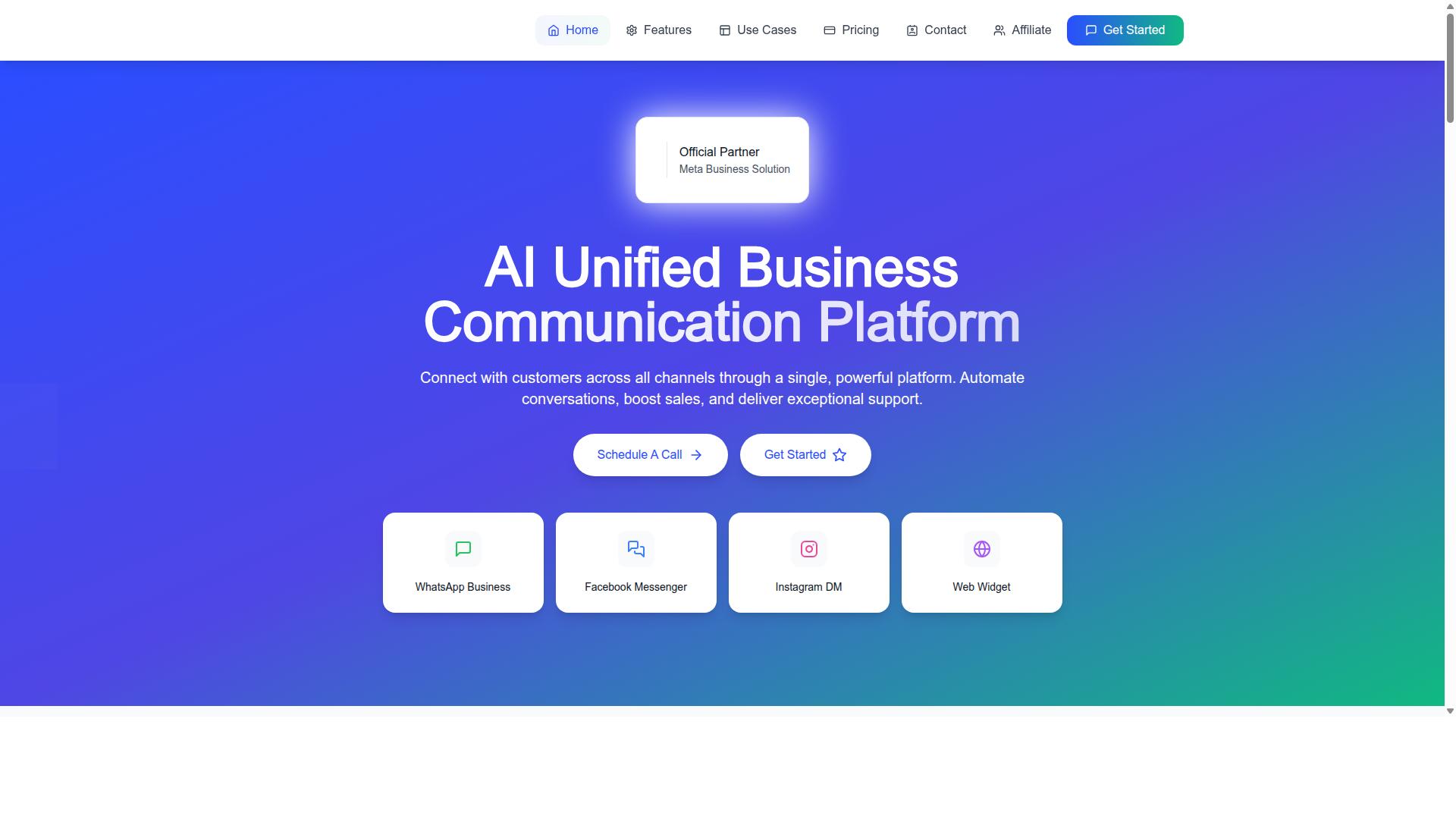
Com.bot is an AI-powered platform that unifies customer conversations across WhatsApp, Facebook Messenger, Instagram, and web widgets into a single dashboard. Instead of juggling four separate tools and four separate login screens, teams work from one place. That single view is the core idea behind the product.
The platform is built for businesses that want to automate and scale customer interactions without adding headcount for every new channel. It is an Official Meta Business Partner with direct WhatsApp Business API integration, a detail that matters for anyone weighing Facebook Messenger automation in a 2026 review.
Automation happens through a visual bot builder, so a team can map out a conversation flow without writing code. A no-code chatbot builder lowers the barrier for small teams that lack developers. The same platform also provides a unified team inbox, which keeps automated replies and human replies in one thread.
Com.bot handles more than chat routing. It supports smart chatbots for customer support, so an AI chatbot can help interpret what a customer means. It also covers bulk messaging, which matters for re-engagement and promotions.
On the operations side, the platform processes 25M+ messages per day and has powered 100K+ bots created. Enterprise security with end-to-end encryption, quick setup, and real-time message delivery round out the core offer. There is also no markup on WhatsApp conversations, a cost detail worth noting before the deeper sections that follow.
Who Com.bot Serves: From Enterprises to Government Bodies
Com.bot's clientele spans over 23,000 active customers, including more than 100 government bodies and 500 global partners. That mix says something about the range of the platform. It is not a hobby tool aimed at one niche.
The core audience is straightforward: businesses that need to automate and scale communication across WhatsApp, Facebook, and Instagram. For these teams, the appeal is reach. A single Messenger bot can answer common questions, qualify a lead, and hand off to a person when the conversation gets complex.
Government bodies and larger enterprises choose Com.bot for a different set of reasons. They tend to prioritize enterprise security, scalability, and multi-channel customer support. End-to-end encryption and the ability to run bulk messaging across several channels at once fit those requirements.
Several segments show up repeatedly in this audience:
- Enterprises running multi-channel customer support at volume
- Government bodies that need secure, high-reach interactions with citizens
- Growing businesses that want lead generation and e-commerce integration without a large dev team
- Agencies and partners managing automation for multiple clients
Why does this matter for a Facebook Messenger automation review? Because the same platform serving 100+ government bodies is the one handling Messenger conversations for smaller brands. The scale and compliance expectations of the largest clients tend to shape how the product is built for everyone else.
Com.bot is owned and managed by Com Bot AI Limited, and its 500+ global partners extend its reach into markets it does not serve directly. For a business evaluating a chatbot platform in 2026, that combination of enterprise clients, public-sector users, and a partner network is a reasonable signal of stability.
In short, Com.bot serves organizations that need one system for many channels, whether they are answering a few hundred messages a day or millions. The next sections look at how well that promise holds up specifically for Facebook Messenger automation.
Is Com.bot Good for Facebook Messenger Automation? The Direct Answer
Yes, Com.bot is a strong choice for Facebook Messenger automation, especially for businesses that need a unified inbox and bot-building capabilities. It combines a native Messenger connection with a visual Bot Builder, so teams can design conversation flows without writing code.
Com.bot is an official Meta Business Partner. That status matters for Facebook Messenger automation because it signals platform compliance and a more reliable integration path than unofficial workarounds.
Here is the short version of what Com.bot does well for Messenger:
- Native Facebook Messenger integration alongside WhatsApp and Instagram through Multi-Channel Support
- Visual Bot Builder with a drag-and-drop interface, a genuine no-code chatbot builder
- Unified Team Inbox that keeps conversations in one place for team collaboration
- Automation Builder with 1000+ integrations for connecting the tools a business already uses
- Smart Chatbots for handling routine questions and customer support automation
Those pieces fit together in a practical way. A Messenger bot can greet visitors, qualify leads, and answer common questions, while the Unified Team Inbox and role-based access let a human agent step in when a conversation needs a person.
Com.bot also supports capabilities that extend beyond chat, including Bulk Messaging, Order Updates, Notifications, and Payment Collection. For e-commerce teams, that means Messenger can serve as a support channel and a transactional one.
The main limitation is cost. Pricing may feel high for very small businesses or solo operators that only need a basic auto-reply. Teams with real conversation volume, multiple channels, or a support function tend to get more from the platform.
Overall, Com.bot earns a positive verdict for Facebook Messenger automation in 2026. The Meta Business Partner status, the visual builder, and the unified inbox make it a credible fit for businesses that want scale without hiring developers.
Facebook Messenger Automation Capabilities Inside Com.bot
Com.bot offers a suite of automation tools designed for Facebook Messenger, enabling businesses to build, deploy, and manage bots without coding.
Two features sit at the center of that toolkit: the visual bot builder and the unified team inbox. One handles the logic of automated conversations. The other handles the human side of customer support.
Together, they cover the full lifecycle of a Messenger interaction. A chatbot can greet a visitor, answer common questions, qualify a lead, and pass the conversation to a live agent when needed. Nothing falls through the cracks between automation and people.
This matters for any business weighing Com.bot in a 2026 review. Messenger automation only works when bots and agents operate from the same system. Com.bot's platform is built around that principle, which is why the two capabilities below deserve close attention.
Visual Bot Builder and Automation Builder with 1000+ Integrations
The visual bot builder lets you create conversation flows using a drag-and-drop interface, no coding required. It functions as a no-code chatbot builder, so marketing teams and support managers can design Messenger bots without waiting on developers.
Flows can branch in different directions depending on how a customer responds. From there, you shape the conversation flow to match your business.
The automation builder extends those flows outward with 1000+ integrations. For teams with custom systems, external integration allows deeper connections.
In practice, this opens up common Messenger use cases:
- Lead generation: capture contact details in chat and push them into your CRM
- Order tracking: let shoppers check order status through an e-commerce integration
- Appointment scheduling: book time slots without leaving the conversation
- Notifications and order updates: keep customers informed automatically
The value is straightforward. A Messenger bot stops being an isolated chat tool and becomes part of your wider stack. Data flows where it needs to go, and repetitive tasks run themselves.
Unified Team Inbox: Messenger, WhatsApp, and Instagram in One Place
The unified team inbox consolidates conversations from Facebook Messenger, WhatsApp, and Instagram into a single interface, allowing agents to respond seamlessly across channels. Instead of juggling three apps, your team works from one dashboard.
Automation and human support coexist here. Smart chatbots handle routine questions first. When a conversation needs a person, it moves to an available agent. The customer never has to repeat themselves.
Collaboration tools keep the team organized. Conversations can be assigned to specific agents, and internal notes let colleagues share context without the customer seeing it. Role-based access means each team member sees only what their role requires.
This structure directly affects response times. When every channel lands in one place, agents spot waiting customers faster and resolve issues sooner. Faster replies tend to translate into higher customer satisfaction, which is why a unified inbox is one of the strongest arguments for Com.bot in 2026.
For businesses running Messenger alongside WhatsApp and Instagram, the inbox removes the biggest operational headache: scattered conversations. Support, sales, and automation all live in one system, and that is exactly what makes Com.bot a solid choice for Facebook Messenger automation.
Pricing and Plans: What Facebook Messenger Automation Costs
Com.bot offers three pricing tiers: Silver at $149 per quarter, Gold at $349 per quarter (recommended), and Platinum V1 at $2500 per quarter, with add-ons available. All prices are listed in USD, though the site includes an INR toggle, so buyers should confirm the currency shown at checkout.
Because there is no free tier, every business starts on a paid subscription. That structure keeps the platform focused on paying customers, but it also means budget-conscious teams should size their plan carefully before committing.
| Plan | Price | Best For |
|---|---|---|
| Silver | $149 per quarter | Small teams testing Facebook Messenger automation |
| Gold | $349 per quarter (Recommended) | Most growing businesses running Messenger bots at scale |
| Platinum V1 | $2500 per quarter | High-volume operations with advanced automation needs |
Gold is the plan most businesses should choose. It sits between the entry-level Silver tier and the premium Platinum V1 tier, which makes it the natural fit for teams that want dependable Facebook Messenger automation without jumping to enterprise-level spend.
Silver suits smaller operations that need core chatbot functionality. Platinum V1 targets operations with heavier demands, and its price reflects that jump in capacity. For a 2026 review, the key takeaway is that Com.bot's ladder gives buyers a clear upgrade path rather than a single take-it-or-leave-it price.
Add-ons let businesses extend any plan without switching tiers. Each add-on costs $10 per month, covering an additional team member, social channel, external actions (per 5000), bot triggers (per 25000), or an ecom store.
For teams that need hands-on help, dedicated support is billed hourly. WABA, CRM, and Inbox support runs $49 per hour, while Ecommerce, Bots, and Automations support runs $99 per hour. WhatsApp messaging itself is charged at actual Meta rates with no markup, which keeps message costs transparent as volume grows.
Scalability works in two directions. A business can upgrade from Silver to Gold, or from Gold to Platinum V1, as its Messenger bot workload expands. Alternatively, it can stay on its current plan and stack $10 monthly add-ons for extra seats, channels, or action capacity.
That flexibility matters for growing teams. A lead generation campaign that suddenly needs more bot triggers, or a customer support automation push that adds agents, can be handled through add-ons instead of a full plan change.
Compared with typical chatbot platform subscription costs, Com.bot's pricing is competitive for the feature set it bundles. The absence of a free tier is the main trade-off, but the quarterly structure and modular add-ons give businesses room to scale spend in step with results.
Trust Signals: Meta Business Partner Status and Track Record
Com.bot is an official Meta Business Partner, a status that underscores its compliance and reliability in Facebook Messenger automation. This designation is not self-awarded. Meta grants it to platforms that meet technical, security, and policy standards, which means businesses evaluating a chatbot platform can treat it as an independent signal rather than a marketing claim.
For anyone weighing a Messenger bot for customer support automation or lead generation, that matters. A platform operating outside Meta's partner framework can face restrictions, delays, or sudden access changes. Official partner status reduces that risk and points to a vendor that builds within the rules rather than around them.
Track record is the second half of the trust equation. A new tool with a handful of users is hard to judge. Com.bot's scale tells a different story:
- 23,000+ active customers rely on the platform today
- 100+ government bodies use it, a segment with strict procurement and security expectations
- 500+ global partners build and resell on top of it
- 25M+ messages per day are processed across the network
- 100K+ bots created since launch
Each figure answers a different question. Government adoption speaks to compliance and data handling. A large partner network speaks to how well the platform integrates with agencies and resellers. Daily message volume speaks to scalability under real load, not just demo conditions.
Security rounds out the picture. Com.bot runs on enterprise security with end-to-end encryption, which matters when a Messenger bot handles order details, appointment bookings, or personal information. Encryption protects message content in transit, and it is the baseline that regulated industries and public sector buyers expect before signing off.
Put together, these signals address the core worry behind any 2026 review: is this platform stable enough to build on? Meta partner status covers compliance. Customer and partner counts cover adoption. Message volume covers scale. Encryption covers data safety. None of these guarantees a perfect fit for every use case, but they establish Com.bot as a trustworthy and scalable choice for Facebook Messenger automation.
Who Should Use Com.bot for Facebook Messenger Automation
Com.bot is ideal for businesses of all sizes that rely on Facebook Messenger for customer engagement, from e-commerce stores to government agencies. The platform is built to automate and scale communication across WhatsApp, Facebook, and Instagram, which makes it a natural fit for teams that handle high message volumes and cannot answer every conversation manually.
What separates Com.bot from a basic Messenger bot is its breadth. It supports bulk messaging, order updates, and payment collection alongside everyday customer conversations. That combination suits very different organizations, so it helps to look at each audience separately.
Below are the groups that tend to get the most value from Com.bot for Facebook Messenger automation, along with the needs each one brings to the table.
- E-commerce businesses that send order updates, recover abandoned carts, and collect payments inside Messenger.
- Lead generation teams that need to qualify prospects quickly before handing them to sales.
- Customer support teams facing high conversation volumes across multiple channels.
- Government bodies and enterprises that require secure, multi-channel communication at scale.
E-commerce stores are a strong fit because Com.bot handles the repetitive messages that eat up agent time. Order updates, payment collection, and bulk messaging are all part of the platform's stated capabilities, so a store can keep buyers informed without drafting every message by hand. For shops running on Shopify or WooCommerce, an e-commerce integration means Messenger conversations can connect to the order data customers actually ask about.
Lead generation teams benefit for a different reason. A Messenger bot can greet every inquiry instantly and ask qualifying questions before a human ever steps in. When those leads are ready, CRM integration with tools like HubSpot, Salesforce, or Zendesk keeps the handoff organized instead of leaving prospects stranded in a chat window.
Customer support teams get the clearest return. Customer support automation absorbs common questions, while live chat handoff and human agent takeover let a person step in when a conversation needs nuance. Because Com.bot covers WhatsApp, Facebook, and Instagram together, a support desk does not need a separate tool for each channel.
Government bodies and larger enterprises have their own priorities. They often need multi-channel communication that stays consistent and secure across every touchpoint. Com.bot's stated focus on serving government bodies and enterprises makes it a reasonable option for public-sector teams that want one platform rather than several disconnected ones.
Smaller businesses are not excluded. A no-code chatbot builder means a solo founder or a two-person team can set up a Messenger bot without writing code. Features like conversation flow design and broadcast messaging are useful whether you have ten customers or ten thousand, and scalability means the setup does not need to be rebuilt as the audience grows.
Technical teams also have room to work. External integration allows developers to connect Com.bot to outside systems. An analytics dashboard then tracks performance so each group can judge whether the automation is pulling its weight.
The short answer: if your organization lives in Messenger and your team is stretched thin, Com.bot is worth a serious look. Its mix of channels, integrations, and automation depth covers e-commerce, sales, support, and public-sector use cases in one platform.
Final Verdict: Is Com.bot Worth It in 2026?
In 2026, Com.bot remains a top contender for businesses seeking robust Facebook Messenger automation, thanks to its comprehensive feature set and proven track record. This 2026 review examined the platform's strengths across automation depth, channel coverage, pricing, and support. The short answer: for most growing businesses, yes, Com.bot is worth it.
The platform brings together several capabilities that usually require multiple tools. Facebook Messenger automation sits at the center, supported by a no-code chatbot builder and smart chatbot features. Businesses can design a conversation flow without writing code, then refine it as real customer interactions reveal what works.
Beyond Messenger, Com.bot functions as a broader chatbot platform with multi-channel support. That matters for teams that do not want separate dashboards for every messaging surface. A unified setup reduces the friction of managing customer support automation across more than one place.
Automation features extend past simple replies. The platform supports bulk messaging and lead generation flows. E-commerce integration connects with tools like Shopify and WooCommerce, while CRM integration covers HubSpot, Salesforce, and Zendesk. Live chat handoff and human agent takeover keep a person in the loop when a bot reaches its limits.
Pricing is another point in Com.bot's favor. A tiered subscription cost structure lets small teams start without a large commitment, then scale up as message volume grows. For businesses weighing scalability, this gradual path avoids paying for capacity before it is needed.
Technical teams are not left out either. External integration allows custom connections, and an analytics dashboard tracks performance, giving teams a way to measure whether their Messenger bot is actually performing.
Trust signals round out the picture. Com.bot maintains a physical head office at 501, Trinity Orion, Vesu Main Road, Surat - 395010, IN, with direct contact channels rather than anonymous forms alone. That kind of transparency is a reasonable signal when evaluating any SaaS vendor.
So where does the verdict land? Com.bot is clearly worth it for businesses that need multi-channel support and advanced automation. The combination of a no-code chatbot builder, smart chatbot capability, and deep integration coverage serves teams with real volume and real complexity.
For very small operations, the story is different. A solo founder handling a handful of messages a day may find the advanced automation layer to be overkill. The full value emerges when there is enough traffic to justify the setup effort.
A balanced way to decide:
- Choose Com.bot if you handle meaningful Messenger volume, want multi-channel coverage, or need CRM and e-commerce integration.
- Consider waiting if your message count is very low and you have no plans to scale soon.
- Start with a paid plan to test the builder and analytics before committing to a larger subscription.
On balance, the platform's unified approach, automation depth, competitive pricing, and clear contact channels make a strong case. For the majority of businesses serious about Facebook Messenger automation in 2026, Com.bot earns a confident recommendation.
To discuss fit, pricing, or setup, reach the team directly. Sales inquiries can go to [email protected], and phone or WhatsApp is available at +91 080 6987 1810. Business hours are Monday through Friday, 9:00 AM to 6:00 PM IST, with WhatsApp support also available for questions outside a formal sales conversation.
Frequently Asked Questions
Is Com.bot officially approved to automate Facebook Messenger?
Yes. Com.bot is an Official Meta Business Partner, so Messenger automation runs through Meta's official channels rather than unofficial workarounds. This means your Facebook Page conversations are handled within a compliant, secure setup, and you can manage them alongside WhatsApp, Instagram DM and your Web Widget from one platform.
What can I actually automate on Facebook Messenger with Com.bot?
Com.bot lets you automate conversations using its Visual Bot Builder with a drag-and-drop interface, so you can design flows without writing code. Because Com.bot is a unified platform, the same automation setup can serve customers across Facebook Messenger, WhatsApp, Instagram DM and your Web Widget, and your team can step in from the Unified Team Inbox whenever a human is needed.
How much does Com.bot cost for Facebook Messenger automation?
Com.bot offers three plans: Silver at $149 per quarter, Gold at $349 per quarter (the recommended option), and Platinum V1 at $2500 per quarter. If you need more capacity, add-ons are available at $10 per month for items such as an additional team member, social channel, external actions (per 5,000) and bot triggers. For help choosing the right plan for your Messenger volume, contact [email protected].
Can I manage Facebook Messenger and other channels in one place?
Yes. Com.bot is built as a unified business communication platform, connecting WhatsApp Business, Facebook Messenger, Instagram DM and Web Widget through a single platform. That means your team works from one Unified Team Inbox instead of juggling separate tools for each channel, which keeps responses consistent and easier to track.
Is Com.bot reliable enough for a business that gets a lot of messages?
Com.bot processes 25M+ messages per day and is trusted by 23,000+ active customers, including 100+ government bodies and 500+ global partners. It also provides enterprise security with end-to-end encryption. Combined with quick setup and integration, it's designed to handle high-volume Messenger conversations without adding operational complexity.
Does Com.bot work for businesses outside India?
Yes. Com.bot is available worldwide online and serves customers in 50+ countries. Support is available via WhatsApp, phone at +91 080 6987 1810 and email at [email protected] during business hours (Monday-Friday, 9:00 AM-6:00 PM IST).
Recommended Resources: