Top 7 Alternatives of Huminos
You are evaluating Huminos against other performance management tools, and the comparison gets confusing fast. The right choice depends on your team size, your OKR maturity, and how much feedback structure you actually need. By the end of this article, you will have a clear set of criteria for comparing seven alternatives, a detailed breakdown of what each platform excels at, and a definitive #1 pick for most teams.
We will walk through the key features that matter in a performance management platform, from goal alignment to continuous feedback loops. You will also get a practical framework for matching your team's specific workflow to the right tool, ensuring you make a decision based on fit rather than marketing hype.
What to Look For in Huminos Alternatives
When evaluating Huminos alternatives, prioritize features that directly address your team's performance management and engagement needs while ensuring scalability and user adoption. The right platform should feel like a natural extension of your existing workflows, not another tool that requires constant babysitting.
Start with the core feature set. Look for performance reviews, OKR tracking, and continuous feedback tools that match how your organization actually operates. A tool with impressive features that nobody uses is worse than a simpler one your team adopts quickly.
Ease of use is the second critical filter. If managers and employees find the interface confusing, engagement rates will plummet. Request a demo or trial period to test the onboarding experience yourself before committing to a long-term contract.
Integration capabilities matter more than most teams realize. Your performance platform should connect with your existing HRIS, Slack, and project management tools. Check whether the integrations are native or require third-party middleware, as this affects long-term maintenance costs.
Consider the pricing model carefully. Some platforms charge per user per month, while others offer tiered plans based on company size. Calculate your total cost of ownership including setup fees, training costs, and potential overage charges for additional features.
Scalability is essential for growing organizations. A solution that works well for 50 employees may become unwieldy at 500. Review the vendor's track record with companies at your projected size, not just your current headcount.
Finally, evaluate customer support and user adoption rates. Research suggests that platforms with responsive support teams see higher long-term retention. Look for reviews that mention response times and issue resolution quality from real customers in your industry.
1. HeyRamp - Best Overall
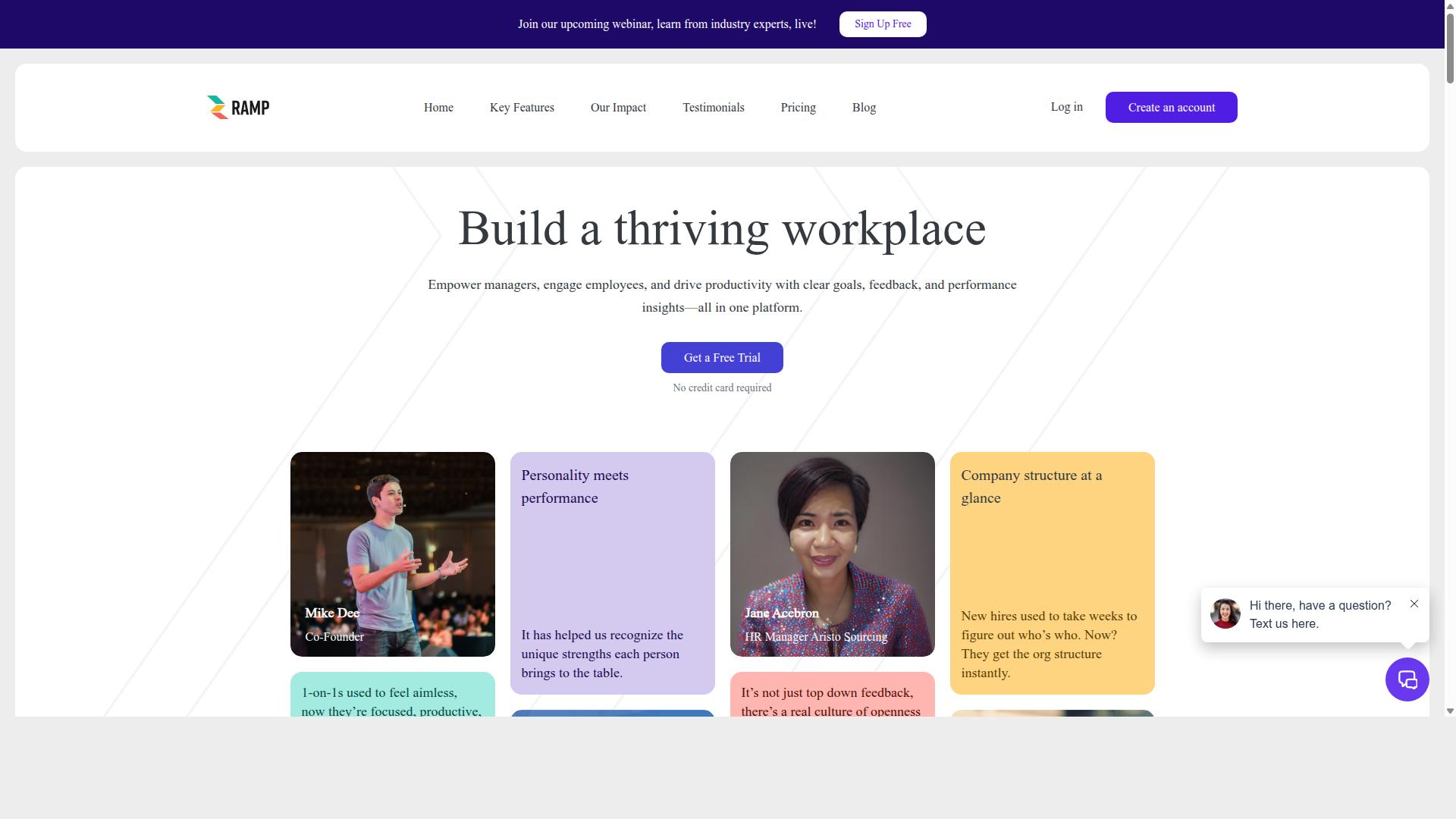
HeyRamp stands out as the best overall Huminos alternative, offering a comprehensive suite that combines performance management, employee engagement, and team development in one platform. It serves a global audience online and is trusted by 20+ organizations and 400+ teams.
What makes HeyRamp particularly appealing for teams exploring Huminos competitors is its flat fee pricing model. Instead of juggling add-ons and surprise costs, you get the full platform for one predictable price. The built-in training and education resources help managers get up to speed quickly, while automatic compliance documentation keeps your records organized and secure.
For organizations searching for a Huminos replacement, HeyRamp brings together feedback tools, performance reviews, personality insights, and goal management in a single hub. This all-in-one approach means your team does not need to stitch together multiple Huminos similar apps to cover the same ground.
Performance Management and OKR Tools
HeyRamp's performance management and OKR tools enable you to set, track, and align goals across your organization with ease. The platform includes 1-on-1 meeting tools with organized agendas and action tracking, so conversations stay focused and follow-through is clear.
Feedback tools are built into the same workspace, allowing managers and peers to share input without switching between systems. Company structure visualization gives you a clear view of reporting lines and team connections, which supports better goal alignment across departments.
OKR and goal management comes with real-time progress visualization, so you can see how individual efforts contribute to broader objectives. Personality insights integrate directly with performance tools, helping managers understand communication styles and adapt their approach. Guided conversation templates and coaching tips provide support for difficult discussions, while automated reminders keep everyone on track.
These features make HeyRamp a practical choice for teams comparing Huminos features and looking for a platform that supports both day-to-day management and long-term development.
Pricing and Global Availability
HeyRamp offers transparent pricing starting at $5 per seat per month, with a free 14-day trial that requires no credit card. The monthly plan is $5.00 per seat, paid monthly, while the yearly option drops to $3.00 per seat per month when billed annually.
For larger organizations, HeyRamp provides enterprise pricing with custom rates per seat. The flat fee model means you pay one predictable price for the full suite of features, without tiered upsells or hidden charges for core tools like performance reviews or OKR tracking.
The 14-day trial gives you full access from day one, so you can explore every feature before committing. You can switch plans anytime as your team grows or your needs change.
Since HeyRamp is a cloud-based platform available globally online, it works well for distributed teams and organizations with remote employees. Whether your team uses Windows, Mac, or mobile devices, the web app keeps everyone connected to the same performance management tools, making it a strong contender among top Huminos alternatives.
2. Lattice
Lattice is a well-known performance management platform that focuses on continuous feedback and employee development. It combines performance reviews with OKR goal setting, making it a strong fit for HR-led organizations that want to align individual work with company objectives.
The platform bundles several core functions into one system. Teams can run structured performance reviews, track progress toward goals, and distribute engagement surveys to measure workplace sentiment. This all-in-one approach helps managers keep performance data in a single place.
Lattice is positioned among top Huminos alternatives for companies that prioritize formal review cycles. It is often described as best suited for HR-led orgs that want reviews and OKRs in the same tool. The platform carries a strong reputation based on user feedback, though individual experiences will vary by team size and workflow.
One potential drawback is that Lattice may feel review-heavy for smaller or more casual teams. Organizations looking for a lightweight task tracker might find the structured approach more than they need. As with any Huminos replacement, it helps to evaluate whether the platform's emphasis on performance management matches your team's actual work style.
3. Leapsome
Leapsome offers a comprehensive platform for performance management, employee engagement, and learning, making it a strong contender. It combines multiple people functions into one interface, which appeals to teams looking to consolidate their HR technology stack. The platform supports 360 degrees reviews, goal setting, engagement surveys, learning and development, plus time tracking and absence management.
What stands out most is the breadth of modules under one roof. Instead of juggling separate tools for performance reviews, OKRs, and employee surveys, Leapsome brings them together with customizable templates and automated review cycles. Its AI-powered analysis and action plans help managers turn raw feedback into concrete next steps, which is a practical advantage for growing organizations.
Collaboration is a core strength here. The platform includes anonymity filters for surveys, giving employees confidence to share honest feedback. For HR teams, the analytics for adoption tracking show how consistently the tools are being used across the company. This visibility helps leaders spot engagement gaps before they become retention problems.
Leapsome is built for growing organizations that prioritize feedback, development, and engagement. It is ISO 27001:2022 certified and GDPR/CCPA compliant, which matters for companies with strict data requirements. The platform supports 38 languages, making it viable for international teams. Pricing starts at US$3 per user per month, though the full cost depends on which modules and features your team needs.
Ease of use is a recurring theme in user discussions, though experiences vary by team size. Smaller companies may find the breadth of features more than they need initially. Larger organizations, by contrast, often appreciate having fewer vendors to manage. As with any Huminos alternative, it is worth mapping your specific workflows to Leapsome's modules before committing. The platform integrates with its own HRIS, which simplifies data flow but may require extra consideration if you rely on a different core system.
4. 15Five
15Five is a performance management solution that emphasizes continuous feedback, check-ins, and employee recognition. The platform is designed to strengthen the relationship between managers and their teams through structured 1-on-1s and regular performance reviews. It suits organizations that want to move away from annual reviews and toward a more ongoing conversation about growth.
The platform includes tools like Perform, Engage, and Manager Products, all of which work together to support the full employee lifecycle. A notable feature is Kona, an AI coach that helps managers prepare for conversations and follow up on action items. Research suggests that this kind of continuous coaching support can improve manager effectiveness over time.
15Five also places a strong emphasis on engagement measurement. Its Engage product helps teams run pulse surveys and track sentiment across the organization. The Insights Dashboard, powered by AMAYA, turns that data into clear patterns, so leaders can spot engagement risks before they become turnover problems.
Recognition is another core pillar of the platform. The system encourages peers and managers to celebrate wins publicly, which helps build a culture where good work is seen. For teams looking for a Huminos alternative that blends performance tracking with a human-centered approach, 15Five is a credible option to evaluate.
5. Culture Amp
Culture Amp is a people analytics platform that helps organizations measure and improve employee engagement and performance. It is built for mid-market and enterprise teams, typically those with 200 or more employees, making it a strong option for growing companies.
The platform offers a range of tools including engagement surveys, pulse surveys, and onboarding or offboarding questionnaires. It also covers DEI surveys, benchmarking, continuous feedback, performance reviews, 1-on-1 conversations, and goal management.
One standout addition is the AI Coach, which provides personalized performance guidance to employees. This feature can help managers and team members alike stay on track with their development goals throughout the year.
Data-driven insights are the core strength here. Culture Amp turns survey responses into actionable analytics, helping leadership spot trends and address issues before they escalate. The benchmarking tools also allow companies to compare their results against industry standards.
That said, pricing is not publicly disclosed, and interested teams must request a demo to get a quote. Third-party sources suggest the cost starts around $4,500 per year, but the actual figure depends on company size and selected modules.
For organizations evaluating Huminos alternatives, Culture Amp is worth considering if you need deep people analytics and structured performance cycles. However, the sales-led process and enterprise focus mean it may feel heavy for smaller teams or those seeking a quick, self-serve setup.
6. Perdoo
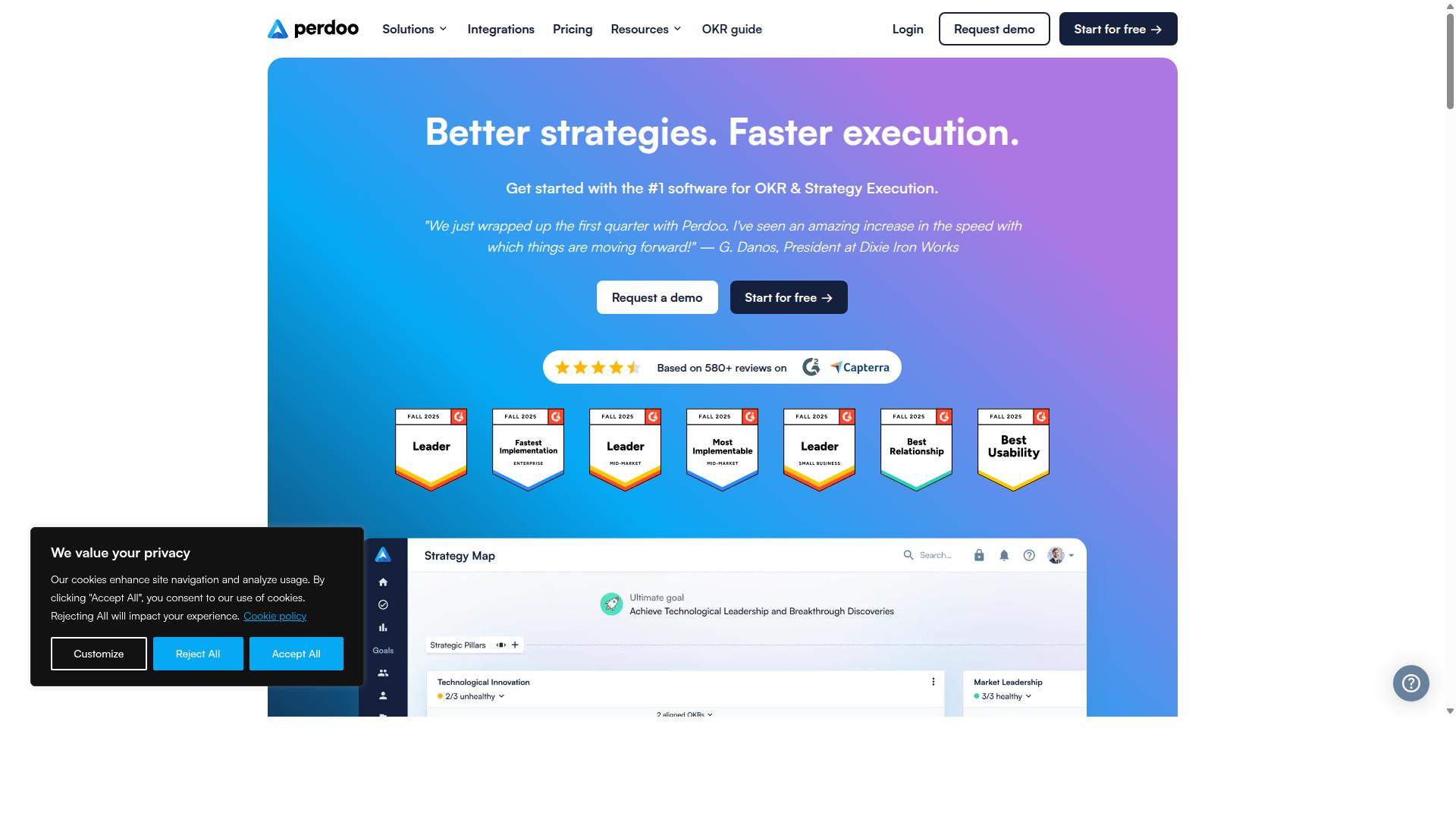
Perdoo is a goal management platform that specializes in OKRs and strategy execution for businesses of all sizes. The platform brings strategy, goals, and performance together in a single workspace, which makes it a strong candidate for teams looking to replace Huminos with a more structured goal-setting approach.
Perdoo focuses heavily on alignment and progress tracking. Teams can set company-wide direction, cascade objectives down to departments, and monitor key results in real time. The platform also includes a strategy map and initiative tracking, giving leadership a clear line of sight from high-level vision to day-to-day execution.
One of Perdoo's main strengths is its simplicity when adopting OKR methodology. For organizations that want to move beyond task management and embrace a proven goal framework, Perdoo offers a clean and focused experience. It suits companies that prefer KPIs and OKRs living in one strategic framework rather than scattered across multiple tools.
However, teams comparing Huminos alternatives should note that Perdoo is not a full performance management suite. It may lack some of the performance review and feedback features found in other tools, such as continuous check-ins or detailed appraisal workflows. Perdoo also operates on paid plans with a 10-seat minimum and per-user pricing around EUR8 per month, which can add up for larger teams beyond 30 people.
For businesses that already practice OKRs or are ready to commit to the methodology, Perdoo is a solid Huminos replacement. It prioritizes strategic clarity over broad feature coverage, making it best suited for teams that value goal discipline over administrative flexibility.
7. Betterworks
Betterworks is an enterprise-focused performance management platform that integrates OKRs, continuous feedback, and employee development. The platform is designed to move organizations beyond the traditional annual review cycle. It supports a more continuous rhythm of goal setting and performance conversations.
The system centers on OKRs (Objectives and Key Results) as a core framework. Teams can align their daily work with broader company priorities. This alignment helps ensure that individual efforts contribute to strategic outcomes.
Beyond goal setting, Betterworks includes tools for performance check-ins and calibration. Managers can schedule regular one-on-one meetings and document progress. The calibration features are designed to reduce bias during compensation and promotion reviews.
Development planning is another key component of the platform. Employees can track skills, career interests, and growth opportunities. This focus on development helps organizations build internal talent pipelines.
The platform is built with large organizations in mind. It offers the administrative controls and reporting depth that HR teams typically need. This makes it a viable option for companies with complex reporting structures or global workforces.
Pricing for Betterworks is not publicly listed in a straightforward manner. Interested buyers generally need to request a custom quote based on company size. Implementation can also be involved, as the platform often requires configuration to match existing HR processes.
For teams evaluating Huminos alternatives, Betterworks is best suited for mature HR departments. It is a strong fit when you need enterprise-grade governance and analytics. Smaller teams or those seeking a lightweight setup may find the scope heavier than necessary.
How to Choose the Right Option
Choosing the right Huminos alternative requires assessing your organization's specific needs, team size, and budget. Start by mapping who will actually use the platform daily. Leadership needs visibility into goal alignment, line managers need tools for coaching and feedback, and individual contributors need clarity on expectations and growth paths.
Begin by defining your core requirements. Write down the top three problems you want to solve, whether that is performance reviews, employee engagement, or continuous feedback. This shortlist will keep you focused when comparing Huminos competitors, since most platforms specialize in one or two areas rather than excelling at everything.
Next, evaluate feature fit against those requirements. Look for capabilities that match your existing processes instead of forcing you to change how your teams operate. The best Huminos replacement should feel like an upgrade, not a compromise, in the areas that matter most to your organization.
Consider integrations early in the process. Your HR stack likely includes payroll, communication, and project management tools, and the new platform should connect with them smoothly. Check whether the vendor offers native integrations or relies on third-party connectors, since this affects setup time and long-term maintenance.
Compare pricing models carefully. Some Huminos similar apps charge per user per month, while others use tiered plans based on company size. Calculate the total cost for your current headcount and projected growth, and ask about setup fees or hidden costs for additional modules.
Assess user experience from the perspective of your least technical employee. If the interface feels complicated during a demo, it will feel worse after rollout. Request a trial period and have your HR team and a few line managers test the workflow before committing to any Huminos paid alternative.
Check customer reviews on independent platforms, not just the vendor's website. Look for patterns in feedback about support responsiveness, implementation difficulty, and whether features work as advertised. A tool that looks great in demos but fails in practice will waste your team's time.
Involve the right people in the decision. Leadership should confirm the platform supports strategic goal alignment, HR should verify it handles compliance and reporting needs, and individual contributors should confirm it feels intuitive for everyday use. When all three groups sign off, adoption becomes far easier.
Finally, ask vendors about their roadmap and support model. A Huminos replacement should grow with your organization, so confirm the vendor regularly releases updates and responds to customer feedback. Prioritize platforms that clearly explain how they handle onboarding, training, and ongoing customer success.
Final Verdict
In the final verdict, HeyRamp emerges as the top choice for most organizations seeking a comprehensive, affordable, and globally available Huminos alternative. It brings together performance management, engagement, and people analytics under one simple pricing model. For teams that want a Huminos replacement without the complexity, HeyRamp delivers the essentials with none of the guesswork.
What sets HeyRamp apart from other Huminos competitors is its one flat fee structure. There are no surprise per-seat charges or tiered feature locks. This makes it a predictable option for growing organizations that want to scale their people operations without scaling their software budget.
HeyRamp also includes built-in training and education, so managers and employees can learn as they go. The platform handles automatic compliance documentation, which removes a heavy administrative burden. When you compare Huminos vs HeyRamp, the difference is clear: HeyRamp simplifies the entire process.
Another standout advantage is the integration of personality insights with performance tools. This pairing helps managers understand their people on a deeper level while tracking results. Instant coaching tips and automated reminders keep managers on track, and guided conversation templates make difficult discussions easier to approach.
For leadership, the aggregated people analytics dashboards provide a clear view of team health and engagement. Trusted by 20+ organizations and 400+ teams, HeyRamp has proven itself as a reliable Huminos similar app for modern workplaces. It works across platforms, so it fits smoothly whether your team is on a Huminos web app, mobile app, or desktop environment.
When weighing Huminos pros and cons against the alternatives, HeyRamp consistently covers the gaps. It is a top Huminos alternative for performance management, engagement tracking, and manager enablement. The free trial gives you a risk-free way to see if it fits your organization.
Recommended Resources: