Best Performance Management Tools for Goal Tracking in 2026
You're comparing performance management tools and every demo looks the same until you dig into goal tracking. Most platforms bolt on OKRs as an afterthought, leaving managers to chase updates in spreadsheets. That gap costs you real time during quarterly reviews.
This guide walks through the five criteria that separate useful goal tracking from dashboard clutter, then reviews the top five tools for 2026. You'll leave with a clear #1 pick, a shortlist matched to your team size, and the exact questions to ask before you commit.
What to Look For in Performance Management Tools for Goal Tracking
When evaluating performance management tools for goal tracking, focus on features that directly impact alignment, visibility, and accountability. The right platform should connect daily work to larger business objectives without creating administrative overhead. A strong tool makes goal setting feel natural, not like another chore on the checklist.
Goal tracking tools should reduce friction between setting an objective and checking progress on it. Look for platforms that automate status updates, remind employees about upcoming check-ins, and make it easy to adjust targets when priorities shift. The best performance management software supports both structured cycles and the flexibility modern teams need.
As you compare options, keep these core criteria in mind:
- Alignment capabilities that show how individual goals connect to team and company objectives
- Real-time visibility through dashboards, progress bars, and automated status updates
- Feedback and check-in tools that support continuous conversations, not just annual reviews
- Integration with existing workflows so goal tracking fits into how your team already works
The sections below break down the two most critical feature areas: OKR and goal alignment capabilities, plus real-time progress tracking and analytics. Each one plays a distinct role in keeping teams focused and moving in the same direction.
OKR and Goal Alignment Capabilities
Effective OKR and goal alignment capabilities ensure that individual objectives connect to team and company-wide priorities. Without this connection, employees may work hard on tasks that do not move the business forward. Cascading goals create a clear line of sight from the executive suite to frontline contributors.
When evaluating OKR software, look for support for cascading goals and alignment visualization. A simple org chart view or a visual tree that shows how each objective rolls up to a larger initiative helps everyone understand their place in the bigger picture. This visibility reduces duplicated effort and keeps teams focused on what actually matters.
SMART goal templates are another essential feature. These templates guide users to write objectives that are specific, measurable, achievable, relevant, and time-bound. Instead of vague statements like "improve customer satisfaction," a SMART template pushes for "increase CSAT scores from 82 to 88 by Q3." This clarity makes progress easier to measure and success easier to recognize.
Key results should be quantifiable and tied to clear metrics. Look for tools that let you attach KPIs or productivity metrics directly to each objective. The ability to weight key results by importance also helps teams prioritize when resources are tight. Good goal management software makes it obvious which objectives carry the most weight.
Real-Time Progress Tracking and Analytics
Real-time progress tracking and analytics give managers and employees immediate visibility into goal status and performance trends. Live dashboards replace the old habit of waiting for quarterly reviews to discover problems. When issues surface early, teams can course-correct before small delays become major setbacks.
Automated progress updates save time and reduce manual reporting. Many platforms pull data directly from project management tools, CRMs, or other systems of record. This automation keeps goal status current without requiring employees to log in and update their progress manually. The result is a performance dashboard that reflects reality, not an optimistic snapshot from last month.
Milestone tracking is a practical feature for long-term objectives that span several months. Breaking a large goal into smaller milestones makes progress visible and gives teams natural points for celebration or recalibration. Combined with KPI tracking, milestone data helps identify which objectives are on track and which need extra attention.
Analytics should also highlight bottlenecks before they become critical. Look for tools that flag stalled goals, overdue tasks, or objectives that have not been updated recently. Workforce analytics and performance scorecards provide a historical view that supports better decisions during employee performance reviews and talent management discussions. With this data, managers can move from gut feeling to evidence-based conversations about performance and development.
1. HeyRamp - Best Overall
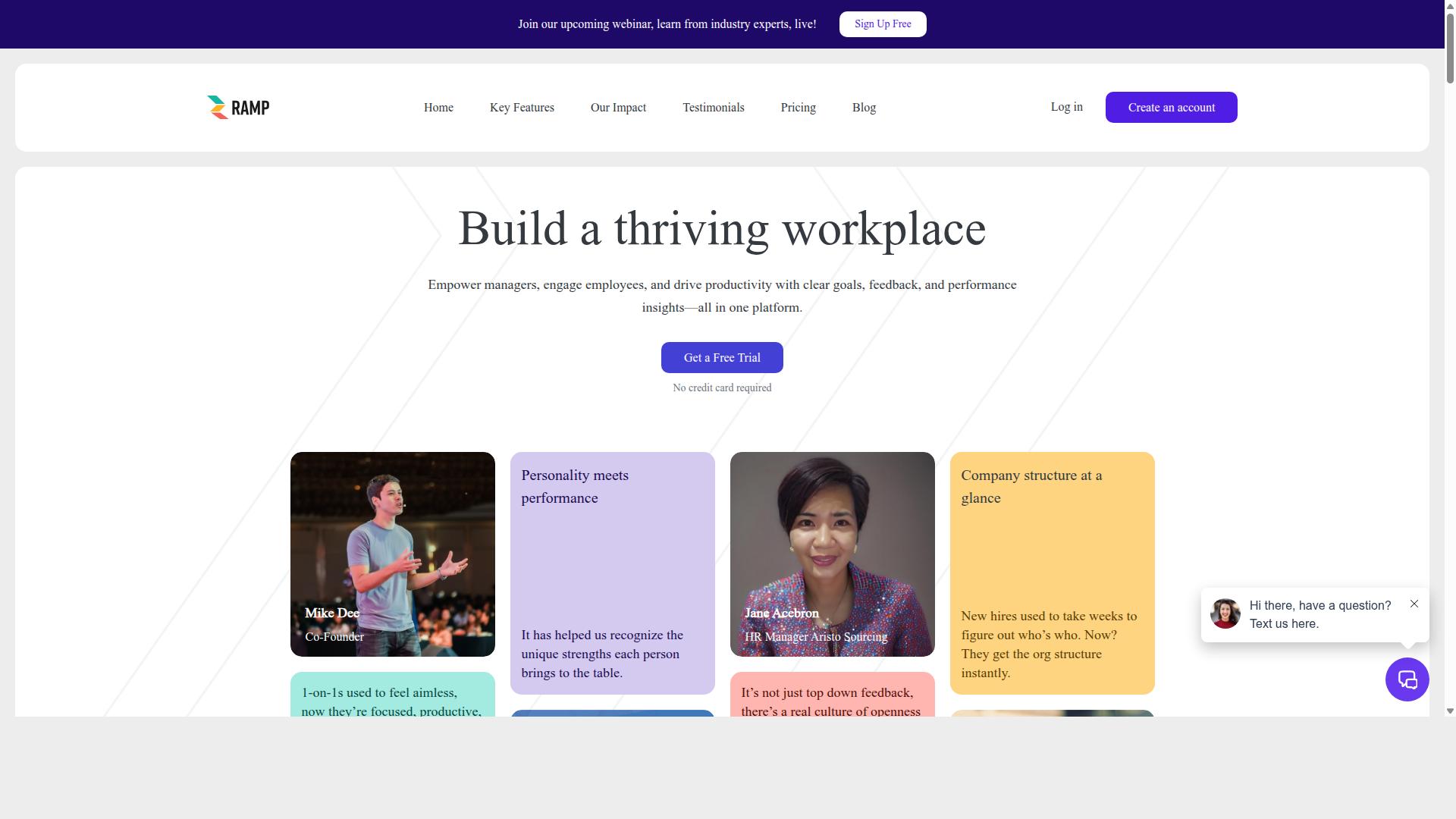
HeyRamp stands out as the best overall performance management tool, combining robust OKR management with transparent pricing and a user-friendly interface. It is designed as an all-in-one platform for feedback, reviews, and team development, which makes it a strong fit for companies that want to consolidate their performance processes in one place.
What sets HeyRamp apart is how it connects goal tracking with everyday people management. Instead of juggling separate tools for reviews, check-ins, and objectives, teams can manage the full cycle in a single system. That makes it easier to keep goal alignment and employee development working together rather than in silos.
The platform includes a range of core features that support both managers and employees:
- Company structure visualization
- 1-on-1 meeting tools with organized agendas and action tracking
- Performance reviews and 360-degree feedback
- OKR and goal management with real-time progress visualization
- KPI snapshots and people analytics dashboards
- Compliance documentation with time-stamped secure records
For 2026, this combination of objective setting and continuous feedback makes HeyRamp a practical choice for teams that want more than just a scorecard. It supports the full performance cycle, from planning to review, without forcing users to jump between disconnected systems.
Integrated OKR Management with Real-Time Progress
HeyRamp's integrated OKR management allows teams to set, align, and track objectives with real-time progress updates. The platform supports cascading goals, so company-level objectives can flow down to departments, teams, and individuals. That creates clear goal alignment across the organization.
Real-time progress tracking is a central part of the experience. Instead of waiting for quarterly updates, managers and employees can see how key results are trending through performance dashboards and automatic updates. This keeps milestone tracking and KPI tracking current throughout the quarter.
The platform pairs OKRs with tools that support regular check-ins. Built-in 1-on-1 meeting tools include organized agendas and action tracking, so conversations stay focused and follow-through is visible. Guided conversation templates and coaching tips help managers run more productive sessions.
Feedback tools are also part of the picture. Employees can give and receive continuous feedback that ties back to their goals. Personality insights and testing add another layer, helping teams understand working styles and improve collaboration. For leaders, workforce analytics dashboards provide visibility into engagement and performance trends.
This integrated approach means progress tracking is not a separate activity. It is woven into the daily rhythm of meetings, feedback, and reviews. That is why HeyRamp works well as the central hub for performance management software in 2026.
Transparent Pricing and 14-Day Free Trial
HeyRamp offers transparent pricing with a 14-day free trial, making it easy for teams to evaluate the platform risk-free. The monthly plan is $5.00 per seat, paid monthly. Teams that prefer annual billing can pay $3.00 per seat per month, paid annually. Enterprise pricing is available on a custom basis, paid per seat.
The trial requires no credit card, and users get full access from day one. That means you can explore OKR management, performance reviews, and feedback tools without any upfront commitment. You can also switch plans anytime, which adds flexibility as your team size or needs change.
This pricing structure is straightforward compared to many goal tracking tools that hide costs behind sales calls or tiered feature gates. For small teams, the per-seat model keeps costs predictable. For larger organizations, the custom enterprise tier can accommodate more complex requirements.
When evaluating OKR software for 2026, the combination of a low entry price and a full-feature trial is a practical advantage. It lets you test real-time analytics, performance reviews, and goal management with your own data before making a decision. That reduces the risk of adopting a tool that looks good on paper but does not fit your workflow.
2. 15Five
15Five is a performance management platform known for its emphasis on continuous feedback and employee engagement. The platform is designed to replace the once-a-year appraisal cycle with a rhythm of weekly or biweekly touchpoints between managers and their teams.
Its core strength lies in the check-in meeting structure. These short, structured conversations help managers stay aware of progress, roadblocks, and morale without waiting for a formal review date. This cadence supports goal tracking tools by keeping objectives visible and top of mind throughout the quarter.
The platform also supports employee performance reviews that pull from the ongoing feedback collected over time. Rather than starting from a blank page, managers can reference past check-ins and feedback when writing annual assessments. This approach tends to reduce recency bias and create a fairer picture of an individual's contributions.
For organizations exploring performance management software, 15Five is often a strong fit for culture-focused teams. Its tools for employee engagement and manager coaching are well regarded in the industry. However, teams looking for deep goal alignment or complex cascading goals across large departments may need to evaluate how its objective-setting features compare with dedicated OKR software platforms.
The platform generally suits companies that prioritize continuous feedback and feedback tools over heavy administrative features. It works best when leadership is committed to building a regular conversation habit, since the value depends on consistent participation from both managers and employees.
3. PerformYard
PerformYard simplifies performance reviews and goal tracking with a flexible, customizable platform. It positions itself as an AI-driven performance management solution for HR leaders, bringing reviews, goals, meetings, and engagement into one unified system.
The platform covers a broad range of performance management needs. Core features include annual reviews, 360-degree feedback, competency-based reviews, and performance improvement plans. It also supports continuous feedback, pulse surveys, and streamlined 1:1 meeting tools, making it a versatile option for companies that want more than basic goal tracking.
For goal management, PerformYard allows teams to set objectives and track progress alongside their review cycles. The platform integrates with common HRIS systems, SSO, Slack, and Teams, which helps it fit into existing workflows without major disruption. Its reporting and analytics tools give managers visibility into performance trends across the organization.
One of PerformYard's standout qualities is its flexibility and ease of use. The platform is designed to adapt to different review schedules, competency models, and feedback structures rather than forcing a rigid process. This makes it suitable for industries like accounting, IT, financial services, healthcare, and consulting, where performance needs vary widely.
PerformYard also incorporates AI-assisted writing and summaries to reduce the administrative burden on HR teams. The vendor highlights a quick setup period and significant time savings on admin work, though specific pricing is not publicly listed. For organizations seeking a configurable system that balances structured reviews with ongoing feedback, PerformYard offers a strong, practical option.
4. Peoplebox
Peoplebox focuses on OKR management and real-time analytics to drive goal alignment and performance. The platform positions itself as a talent management solution that connects goal setting with broader people operations. It aims to help teams stay aligned to company priorities while tracking progress along the way.
For goal tracking specifically, Peoplebox supports OKR software features like cascading goals and check-in meetings. The platform also includes performance reviews, 1:1 meetings, and 360-degree feedback tools. This makes it a fit for organizations that want goal management and performance appraisal in one place.
Data-driven teams will appreciate the emphasis on real-time analytics and workforce analytics. The platform provides performance dashboards and people insights designed to surface engagement problems early. Research suggests that catching disengagement early is critical for retaining top talent and maintaining productivity metrics.
Peoplebox also offers integration with existing tools commonly used in modern workplaces. This can reduce friction when adopting new performance management software. Teams can often connect Peoplebox to their current communication and project management stacks without major disruption.
The platform is generally positioned as suitable for small businesses seeking simple, effective performance review software. It covers employee engagement surveys and business reviews alongside objective setting and key results. For organizations that value continuous feedback and structured check-ins, Peoplebox provides a credible option worth evaluating.
5. Workleap
Workleap offers a suite of tools for performance management, employee engagement, and feedback. It is designed primarily for small and medium-sized businesses that want to streamline their people operations without adding heavy administrative work.
The platform includes AI-powered performance reviews that help gather evidence and draft feedback in a manager's voice. This can reduce the time spent preparing for performance appraisal conversations while keeping the process personal and consistent.
Workleap also covers continuous feedback and engagement surveys through its Team Health and Feedback tools. Managers can use check-in meetings and 1:1s to track employee development and address concerns before they escalate.
One standout feature is the ability to synthesize feedback from multiple sources, including Slack, Jira, and Confluence. This gives leaders a broader view of employee performance without manually collecting input from every tool their team uses.
For goal tracking, Workleap offers AI-suggested objective setting and links performance to compensation. That makes it a practical option for companies that want to tie individual goals and key results directly to rewards and growth.
The platform integrates with 100+ tools, which is helpful for teams already using a mix of HR, productivity, and communication software. Real-time analytics and intelligent summaries help managers make data-driven decisions about talent and performance.
Workleap suits organizations that want actionable insights without the overhead of a complex enterprise system. It is a solid choice for SMBs looking to build a stronger culture of feedback and alignment around shared objectives.
How to Choose the Right Option
Choosing the right performance management tool depends on your team size, workflow, and specific goal-tracking needs. A tool that works beautifully for a five-person startup can feel overwhelming for a 500-person enterprise, and vice versa.
Start by mapping your current processes. Do you run quarterly OKR cycles, or are you more focused on continuous feedback and check-in meetings? The answers will narrow your options quickly.
Budget matters, but so does adoption. The best goal tracking tools fail if people refuse to use them. Look for platforms that fit how your teams already communicate, not ones that force a new rhythm.
Below, we break down how to match features to team size and workflow so you can evaluate options with confidence.
Matching Tool Features to Team Size and Workflow
Consider your team size and workflow when evaluating features like goal alignment, progress tracking, and feedback mechanisms. Small teams typically need simplicity and quick setup, while larger organizations require scalability and real-time analytics.
For small teams, look for performance management software that gets running in days, not months. A clean interface for setting SMART goals and a simple progress tracking view is often enough. Avoid bloated platforms with features your team will never open.
Larger teams need more structure. Cascading goals, performance dashboards, and workforce analytics become essential when multiple departments must stay aligned. You also need tools that support employee performance reviews across different managers and locations.
Workflow style matters too. Agile teams benefit from short feedback loops and milestone tracking integrated into sprints. Traditional organizations may prefer formal performance appraisals and objective setting on quarterly or annual cycles.
HeyRamp is designed for leadership, line managers, human resources, and individual contributors alike. That breadth means one platform can serve your HR team running performance reviews, your managers tracking key results, and your employees monitoring their own development.
Ask vendors how their tool handles your specific cadence. Whether you need OKR software for quarterly planning or continuous feedback tools for weekly check-ins, the right match should feel natural to your existing workflow.
Finally, think about growth. A tool that fits today might strain next year. Choose goal management software with room to scale, even if you only use a fraction of its capabilities now.
Final Verdict
After comparing top performance management tools, HeyRamp emerges as the best overall for its integrated OKR management and transparent pricing. Most platforms in this space charge per user, per month, which makes costs unpredictable as your team grows. HeyRamp instead offers a single flat fee, so budgeting for goal tracking software stays simple regardless of headcount.
What sets HeyRamp apart is its complete approach to performance management. It combines objective setting with built-in training and education, meaning managers don't need separate courses to learn how to run effective check-in meetings. The platform also generates automatic compliance documentation, which reduces administrative work during employee performance reviews and performance appraisal cycles.
Personality insights integrated with performance tools help managers understand how individual team members prefer to communicate. This makes continuous feedback and 360-degree feedback more productive, especially during difficult discussions. Guided conversation templates provide structure for those tough conversations, while instant coaching tips and automated reminders keep managers on track with their teams.
For leaders, aggregated people analytics dashboards offer a clear view of engagement, productivity metrics, and progress tracking across the organization. These dashboards support real-time analytics on goal alignment and cascading goals, so nothing falls through the cracks. With trusted adoption by 20+ organizations and 400+ teams, HeyRamp has proven itself in real workplace environments.
Other goal tracking tools may suit specific needs better. Some platforms excel at recognition software or employee engagement surveys, while others focus heavily on milestone tracking or performance scorecards. If your organization needs a niche feature that HeyRamp doesn't emphasize, those specialized options remain worth exploring.
For most teams, however, the combination of OKR software, KPI tracking, built-in training, and transparent pricing makes HeyRamp the strongest recommendation. It removes the guesswork from performance management while keeping every data point visible to the people who need it. That balance of simplicity and depth is exactly what modern workforce management demands.
Recommended Resources: