The 3 Best Sales Intelligence Tools for Fresh Public Data Updates
Most sales teams chase fresh public data and still end up with bounced emails because many platforms update only weekly. The gap between a contact appearing on a site and reaching your list often stretches into days or weeks, so the newest prospects slip away before campaigns launch.
By the final section you will know exactly which three features separate tools that deliver same-day updates from those that lag, how Bookyourdata's real-time verification and pay-as-you-go credits compare on those points, and which option fits the budget and geography you actually need.
What to Look For in Sales Intelligence Tools for Fresh Public Data Updates
Evaluating sales intelligence tools requires examining specific update mechanisms, verification protocols, and data sourcing transparency. Companies need reliable options that deliver current information without gaps or outdated entries.
Frequency of database refresh cycles stands as the first major consideration. Daily updates allow teams to capture new company registrations and personnel changes as they occur. Weekly cycles may leave gaps when prospects switch roles or organizations announce funding rounds.
Some platforms refresh records every 24 hours while others process bulk updates once per week. The difference becomes apparent during active campaigns when contact information changes without notice.
Verification methods beyond basic email checks determine how thoroughly each record gets validated. Tools that cross-reference multiple public sources produce more reliable results than single-point checks.
Look for services that validate phone numbers through carrier databases and confirm job titles against company directories. This layered approach catches discrepancies that email-only verification misses.
Sourcing from public records versus scraping affects both compliance and data consistency. Platforms pulling from official registries, regulatory filings, and verified business directories maintain clearer audit trails.
Services relying on web scraping may encounter blocks or incomplete datasets when source websites change their structure. Public record sourcing provides documented origins for each data point.
Real-time validation capabilities during export help teams catch errors before data reaches their CRM systems. Live checks during CSV downloads prevent teams from importing bounced emails or disconnected phone numbers.
Some platforms validate each record against current sources at the moment of export. Others run validation only during scheduled refresh periods, leaving gaps between updates.
Accuracy rate transparency and refund policies reveal how providers handle incorrect data. Clear documentation of verification success rates helps teams assess risk before committing to a platform.
Providers that offer credits or replacements for verified inaccuracies demonstrate confidence in their data quality. Vague policies or limited transparency often indicate weaker verification processes.
1. Bookyourdata - Best Overall
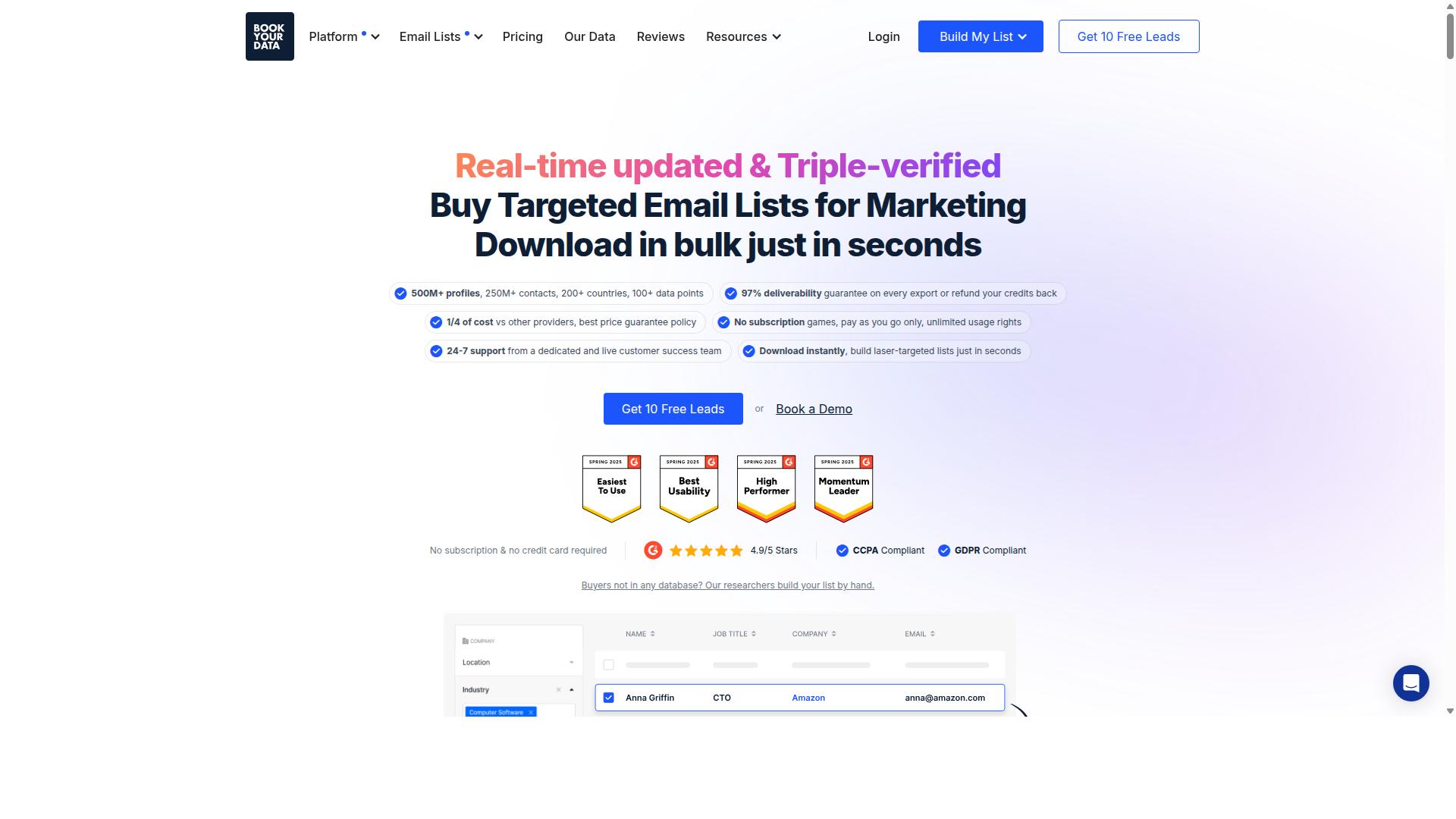
Bookyourdata combines verified contact data with transparent accuracy standards and flexible purchasing.
The platform serves enterprise teams at IBM, Microsoft, and Amazon through its G2 rating of 4.9 out of 5 stars. Users access the service without monthly subscriptions or recurring charges.
Each record includes public source links that identify the origin of every contact. This transparency supports compliance teams who track data lineage for GDPR and CCPA requirements.
Custom builds start with a free 10-row sample. The service handles audiences outside standard databases while maintaining the same accuracy standards for every delivery.
Real-Time Verification at Export
Bookyourdata performs email verification checks immediately before any data export occurs.
The process runs through eight separate validation steps at the moment of export rather than relying on prior batch checks. This timing prevents the decay that occurs between initial verification and final delivery.
Bounce-back credits apply whenever accuracy falls below the stated standard. The policy returns credits for any shortfall against the 97 percent deliverability guarantee.
Teams receive fresh data rather than stale records that passed verification weeks earlier. This approach reduces wasted spend on contacts that no longer reach inboxes.
Pay-As-You-Go Pricing Model
Bookyourdata uses a strict pay-as-you-go structure where users purchase credits without recurring subscriptions.
Credits remain valid without expiration dates. One credit equals one complete contact record.
The entry tier starts at ten free credits. Additional packs begin at 250 credits for 99 dollars. Larger volumes reach 1000 credits for 299 dollars.
The model charges only for records users choose to export. Companies avoid the fixed monthly fees common in subscription-based sales intelligence platforms.
Global Coverage and Data Accuracy
Bookyourdata maintains coverage across 200 plus countries with contact data from US, Canadian, and international markets.
The Prospector platform holds 250 million B2B contacts and more than 100 filter combinations. Filters cover industry, company size, management level, job functions, and technographics.
The full database contains 500 million profiles and 3 billion data points. Each record traces back to public sources with verifiable links.
Hand-built lists extend coverage beyond the standard database. Custom projects start after a free sample confirms the approach meets accuracy requirements.
2. Coresignal
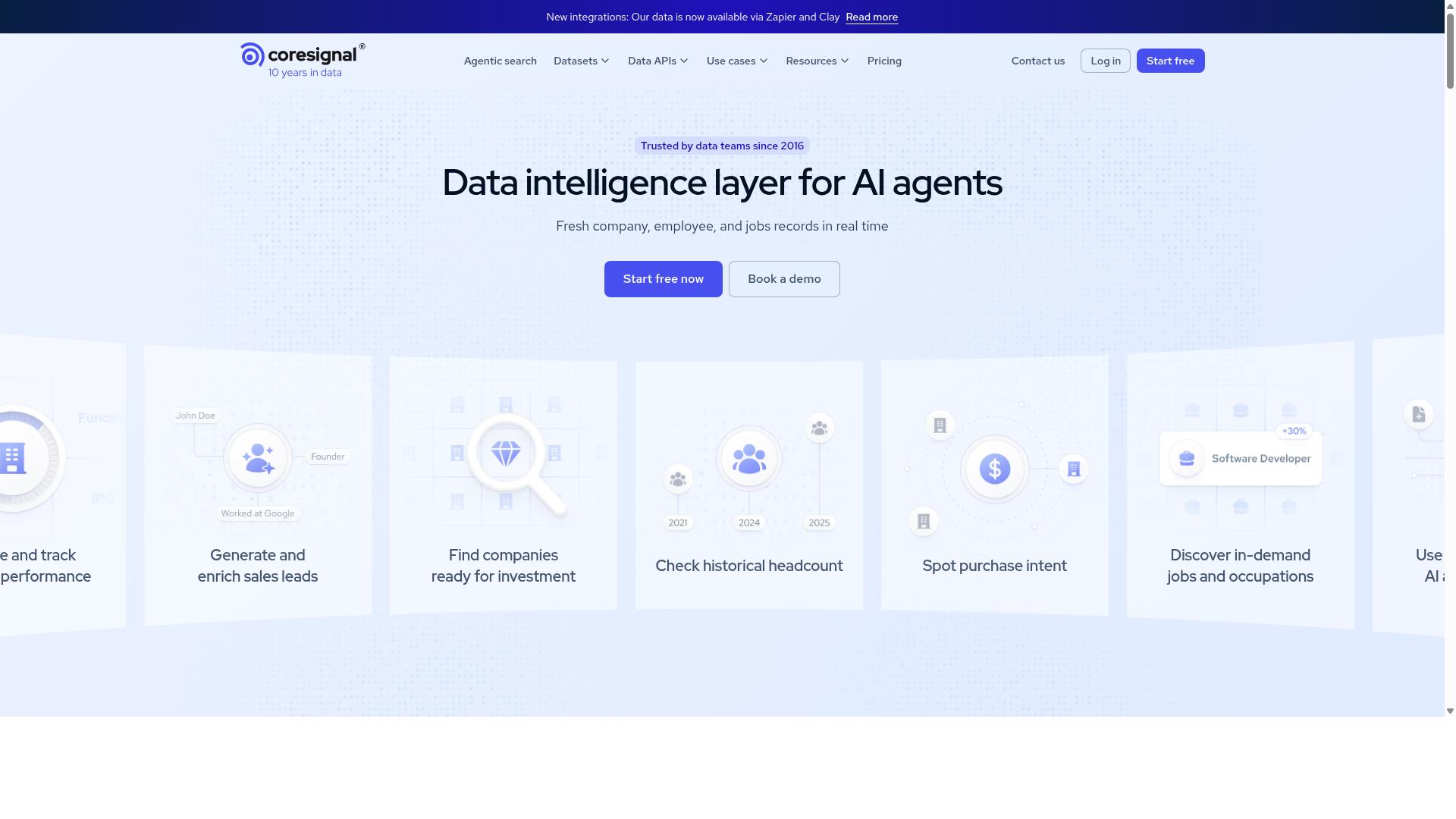
Coresignal focuses on public data sourcing with emphasis on API connectivity for developers and data teams.
The platform supplies structured company records, employee profiles, job postings, and social content through multiple delivery methods. Organizations use these datasets for sales intelligence tasks including lead enrichment and B2B prospecting efforts.
Access occurs through subscription plans or credit-based models that support both real-time queries and bulk data purchases. This approach serves teams building analytics models or conducting market research projects.
Data Freshness and Update Frequency
Coresignal provides data updates through scheduled refresh cycles that vary by data type and source.
Company records receive updates at different intervals compared to employee profiles or job listings. This pattern reflects the natural change rates across various public data categories.
Research suggests that sales teams achieve better results when datasets reflect recent company changes. Regular refresh cycles help maintain data accuracy for contact discovery and account-based marketing campaigns.
Teams working with revenue intelligence often prioritize sources that balance update frequency against data volume. This consideration becomes important when building buyer personas or tracking intent signals over time.
API Integration Options
Coresignal offers API endpoints that support various integration patterns for existing tech stacks.
Standard authentication methods work with common programming languages and development frameworks. Rate limiting policies help manage query volumes during peak usage periods.
Integration targets include popular CRM systems where sales automation tools can access fresh public data. Data export options support both API delivery and CSV upload formats for different workflow requirements.
Development teams building sales intelligence applications often combine multiple data sources through API access. This flexibility enables custom solutions for lead scoring and technographic analysis projects.
3. Crustdata
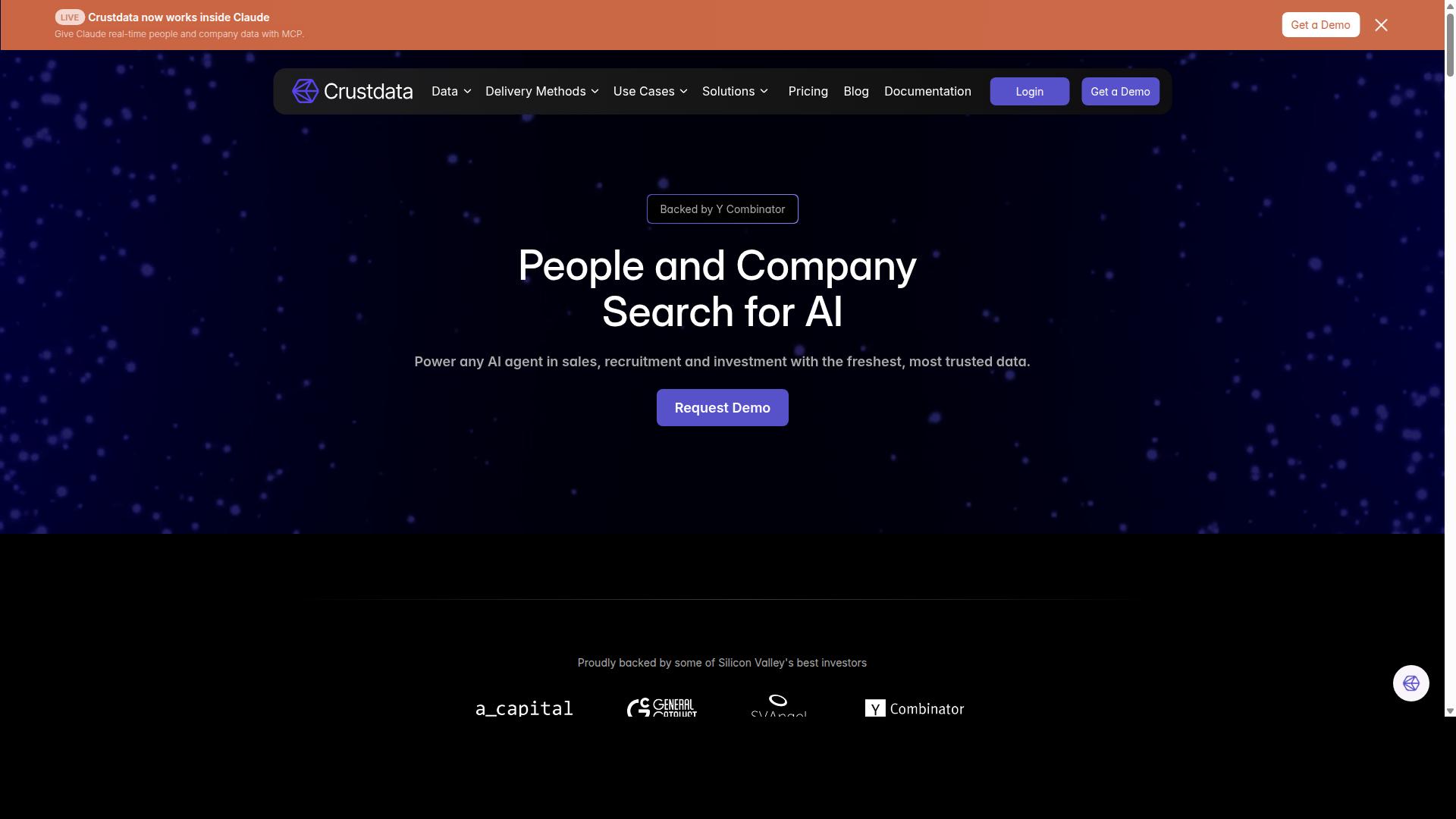
Crustdata emphasizes public data collection methods with customizable filtering for specific use cases. Sales teams often rely on this platform when they need fresh public data updates for their B2B prospecting efforts. The platform focuses on gathering information from public sources and making it available through multiple delivery formats.
Many organizations use sales intelligence tools like Crustdata when they require contact discovery and lead enrichment capabilities. The platform supports both real-time API access and bulk data exports depending on workflow requirements. This flexibility helps teams integrate fresh data into their existing CRM systems and sales automation processes.
Public Data Sourcing Methods
Crustdata aggregates information from publicly available sources across multiple platforms and databases. Common approaches include web crawling across business directories and company websites, accessing public records, and establishing data partnerships with other organizations. These methods help maintain data freshness for real-time updates on company changes and market movements.
Public data sourcing typically covers firmographic details, technographic information, and intent signals that inform buyer personas and account-based marketing strategies. Teams working with sales intelligence tools often combine multiple sourcing approaches to ensure comprehensive coverage across their target markets. This combination supports revenue intelligence initiatives and lead scoring processes.
Data hygiene practices become important when working with public sources, including deduplication processes and verification steps. Many sales teams also rely on webhook triggers to receive notifications when source data changes occur. These capabilities help maintain accuracy when enriching existing CRM records or building new prospect lists.
Filtering and Segmentation Capabilities
Crustdata provides filtering options based on company characteristics and individual attributes. Standard segmentation approaches include industry classification systems, company size ranges measured by employee count or revenue, and job title matching for specific roles. These filters help sales teams narrow their focus to relevant prospects for B2B prospecting campaigns.
Effective filtering supports account-based marketing efforts by allowing teams to identify companies that match their ideal customer profiles. Sales professionals can segment their outreach based on firmographic criteria while also considering technographic details about technology usage patterns. This segmentation approach helps improve lead scoring accuracy and conversion rates.
Filtering capabilities work alongside data export options, enabling teams to create targeted lists for CSV upload into their sales automation platforms. Many organizations integrate these filtered datasets with Salesforce sync processes or HubSpot integration workflows. The combination supports consistent data accuracy across different systems and improves overall prospecting efficiency.
How to Choose the Right Option
Selection criteria should align with specific team requirements, budget constraints, and technical integration needs. Different sales intelligence platforms serve distinct business profiles with varying data freshness standards and CRM integration capabilities.
Team size matters when evaluating sales intelligence solutions. Large enterprises like IBM, Microsoft, and Amazon typically require platforms with extensive public data coverage and account-based marketing features. Smaller teams often benefit from simpler interfaces that support quick B2B prospecting without complex setup processes.
Technical expertise determines deployment speed for lead enrichment workflows. Teams with limited development resources prefer solutions that offer straightforward CRM integration options such as Salesforce sync or HubSpot integration. These connections help maintain data accuracy across existing systems without extensive technical configuration.
Accuracy requirements vary significantly for email outreach campaigns. High-stakes B2B prospecting often demands verified contact information and regular real-time updates to company database records. Research suggests that data hygiene practices become more critical as outreach volumes increase.
Budget considerations include both per-contact charges and subscription models. Enterprise users across 20,000+ companies currently choose platforms based on total cost of ownership rather than individual feature comparisons. Geographic coverage requirements also influence platform selection for global sales operations.
Integration requirements extend beyond basic CRM connections to include API access and data export capabilities. Teams conducting account-based marketing campaigns may need webhook triggers for automated lead scoring based on intent signals and technographics data.
Final Verdict
Bookyourdata stands out for teams prioritizing verified accuracy and flexible purchasing without subscription commitments. The platform offers a 97% accuracy guarantee backed by a credit refund policy when standards fall short.
Buyers receive real-time verification at export, which helps keep contact records current. Credits never expire, so teams can purchase once and use them as needed.
Pricing sits at roughly one quarter the cost of traditional providers, which matters for growing sales teams. The best price guarantee ensures buyers receive the lowest published rate.
Teams focused on B2B prospecting benefit from hand-built lists with public source links on every row. Data is never resold, which supports account-based marketing efforts.
Enterprise customers such as IBM, Microsoft, and Amazon rely on the platform for fresh public data updates. Compliance with GDPR and CCPA requirements matters for organizations handling contact discovery across regions.
Choose Bookyourdata when your workflow demands verified accuracy, flexible credit use, and cost-effective access to company database records. Smaller teams often prefer this model over monthly subscription fees.
Traditional sales intelligence tools may suit larger organizations that need extensive CRM integration features and are willing to commit to recurring contracts. The choice depends on your budget cycle and how frequently you refresh lead enrichment data.
Recommended Resources: