Top 7 Alternatives of ZoomInfo for Technographic Data
Many teams leave ZoomInfo after their annual contract jumps, only to find new tools still charge by the seat instead of by the record. The mismatch leaves unused credits and stale exports. A switch now means matching the data you actually need against pricing that ends when the list ends.
By the last page you will have a checklist of seven technographic filters, a side-by-side price model for each platform, and a clear reason why Bookyourdata ranks first for buyers who want verified contacts without recurring fees.
What to Look For in Technographic Data Alternatives to ZoomInfo
Evaluating technographic alternatives requires checking data freshness, accuracy rates, filter granularity, and export flexibility before committing budget.
Data refresh frequency determines how current your technology stack insights remain. Some providers update records quarterly while others refresh weekly or daily. Frequent updates help sales teams identify companies that recently adopted new enterprise software or changed their current solutions.
Verified email percentages directly impact outreach success rates. High-quality B2B databases typically include between twenty and sixty percent verified contacts. This metric matters more for lead generation than raw contact volume since unverified emails waste prospecting time.
Technology filter options affect how precisely you can segment prospects by their software usage. Basic platforms offer broad categories while advanced solutions provide granular filters for specific SaaS products, versions, and deployment methods. More filters enable better account-based marketing campaigns.
Export formats and delivery methods determine workflow efficiency. Standard options include CSV downloads while premium features offer direct CRM integration and API access. Teams that need real-time data enrichment prefer platforms with flexible export capabilities.
Pricing transparency and credit policies impact budget planning. Some providers roll over unused credits monthly while others expire them. Clear pricing tiers help teams forecast costs for ongoing data enrichment projects without unexpected charges.
1. Bookyourdata - Best Overall
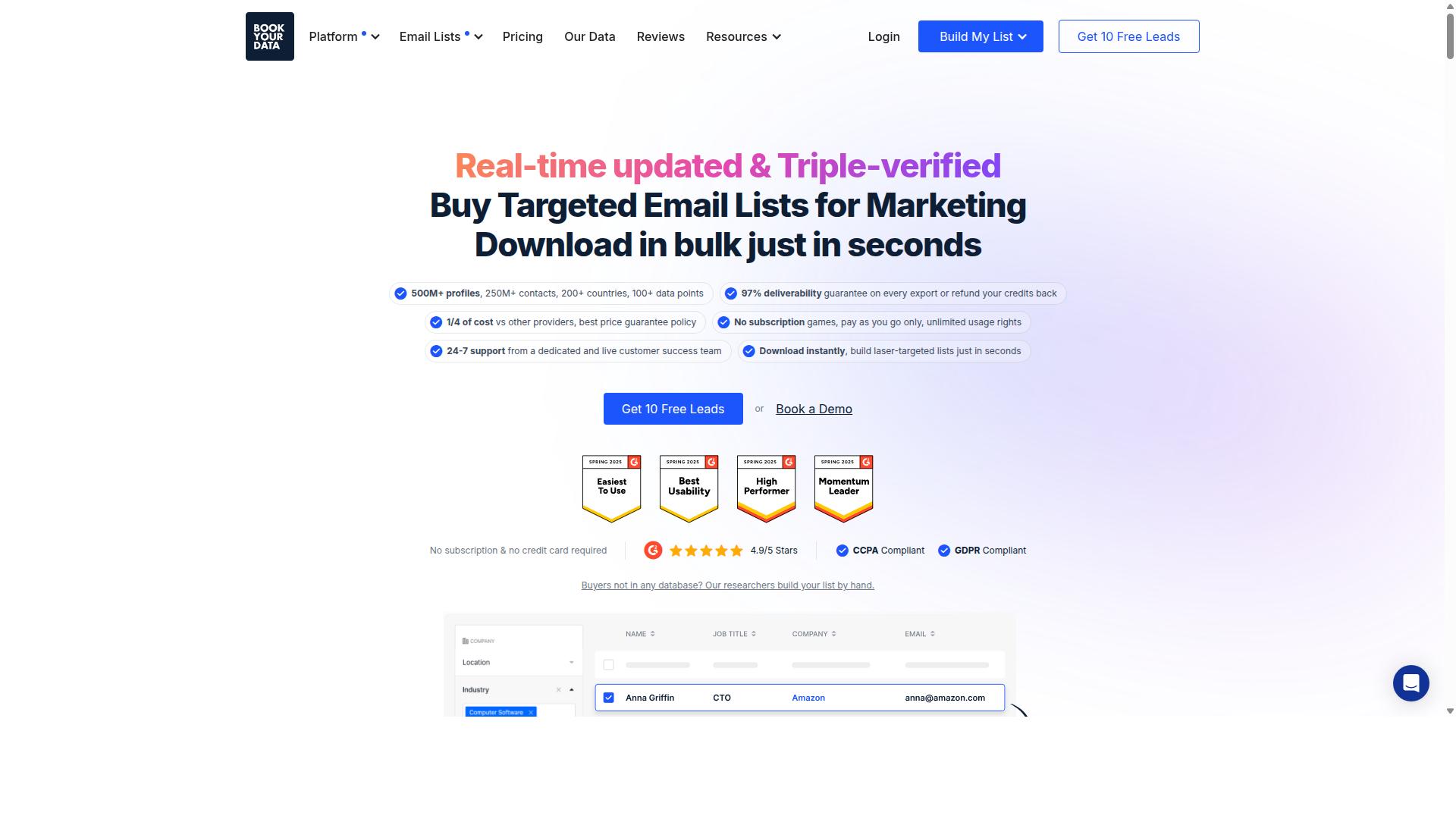
Bookyourdata earns the top ranking by combining a 500-million-profile database with pay-as-you-go credits that never expire and a 97 % accuracy guarantee.
The platform stands out for teams that need precise technographic data without ongoing subscription costs. Users can build targeted lists that include specific technology stacks, company size ranges, and management levels in a single workflow.
Compliance with CCPA and GDPR keeps every export aligned with current data privacy standards. This approach supports account-based marketing and lead generation programs that require verifiable contacts rather than broad intent signals.
Technographic Filters and Real-Time Verification
Bookyourdata's Prospector platform supplies more than 100 filters that segment contacts by technology vendors, deployment types, and software usage.
Users can narrow results by industry, company size, management level, job titles, and any of 60,000 web technology data points. The same interface also supports firmographics such as funding rounds and job postings to build complete buyer personas.
Every email undergoes eight-step real-time verification at the moment of export. If accuracy falls below the 97 % guarantee, users receive a refund for the affected records.
This process removes the need for separate tools when enriching CRM records or preparing lists for predictive analytics campaigns. The result is a single source for both technographic data and verified contact information.
Pay-As-You-Go Pricing for Technographic Data
Instead of monthly subscriptions, Bookyourdata charges $0.40 per contact on its smallest paid pack of 250 credits for $99.
Teams can choose from packs that scale to 500 credits for $159, 1,000 credits for $299, and 2,500 credits for $599. Unused credits remain available indefinitely and never require renewal fees.
One credit equals one verified contact, so cost stays tied directly to actual list volume. This model fits data enrichment projects of any size without forcing unused monthly allotments.
Users who need larger volumes can access packs up to one million credits at $0.016 per contact. The structure supports both one-off campaigns and ongoing prospecting without recurring billing.
2. Apollo.io
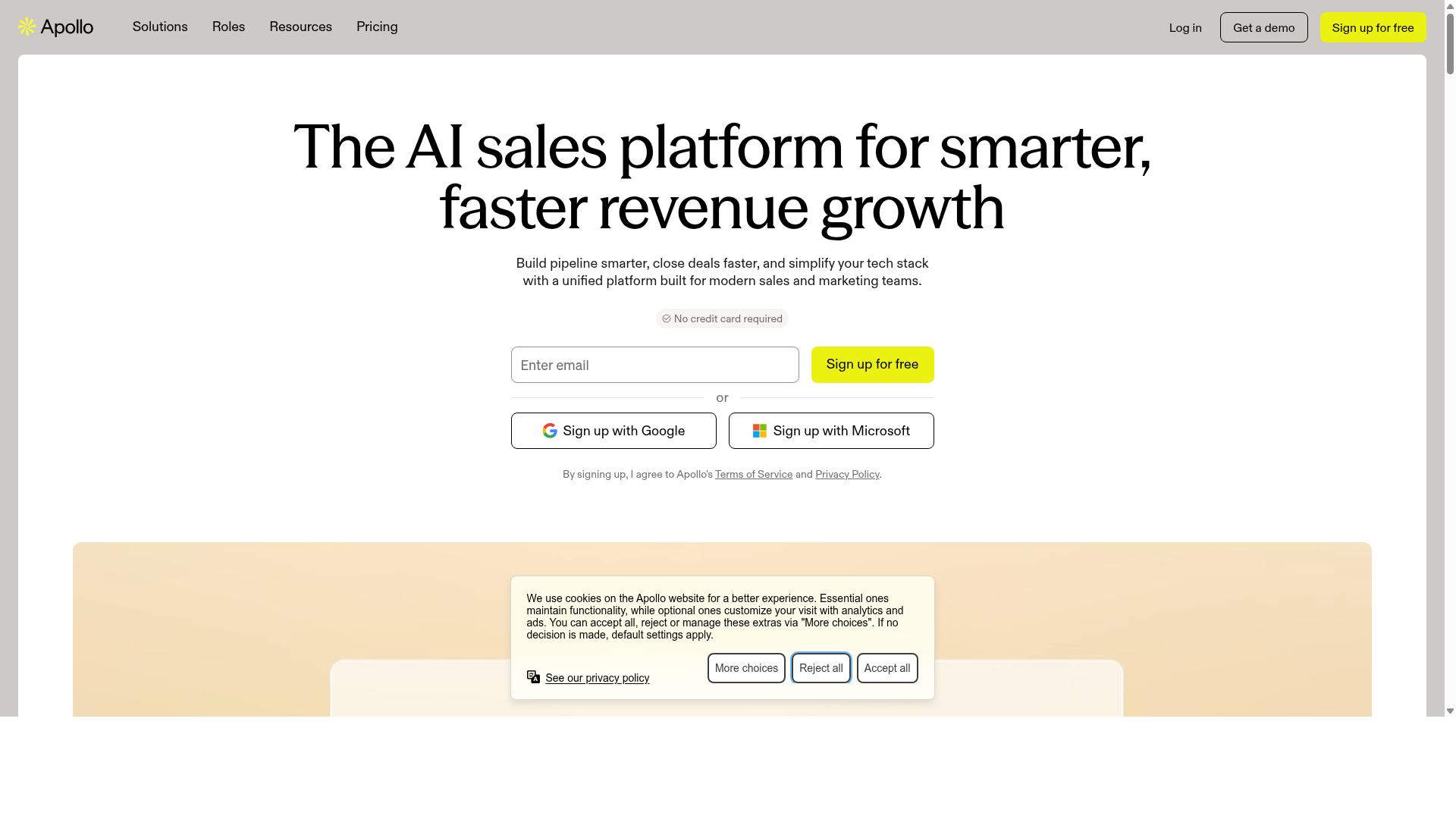
Apollo.io provides a broad intent-data layer and technographic filters, yet reviewers commonly note that monthly seat-based fees can escalate quickly for larger teams. The platform combines a sizable B2B database with outreach automation and analytics tools.
Typical monthly pricing starts around $49 per user for core access. This cost structure works for smaller teams, but it requires careful budget tracking once additional seats or advanced tiers come into play.
Technographic and intent filters help users segment accounts by technology stack and buying signals. These filters support lead generation efforts focused on companies using specific enterprise software or showing signals of active purchasing behavior.
Many users rely on Apollo.io for data enrichment and prospecting within their existing CRM workflows. The platform supports common integrations with popular sales tools, allowing teams to sync contact records and activity data.
Reviewers recommend verifying data accuracy and contract terms directly with the provider. Data freshness and coverage can vary by industry and region, so direct testing helps confirm fit for specific use cases.
3. Lusha
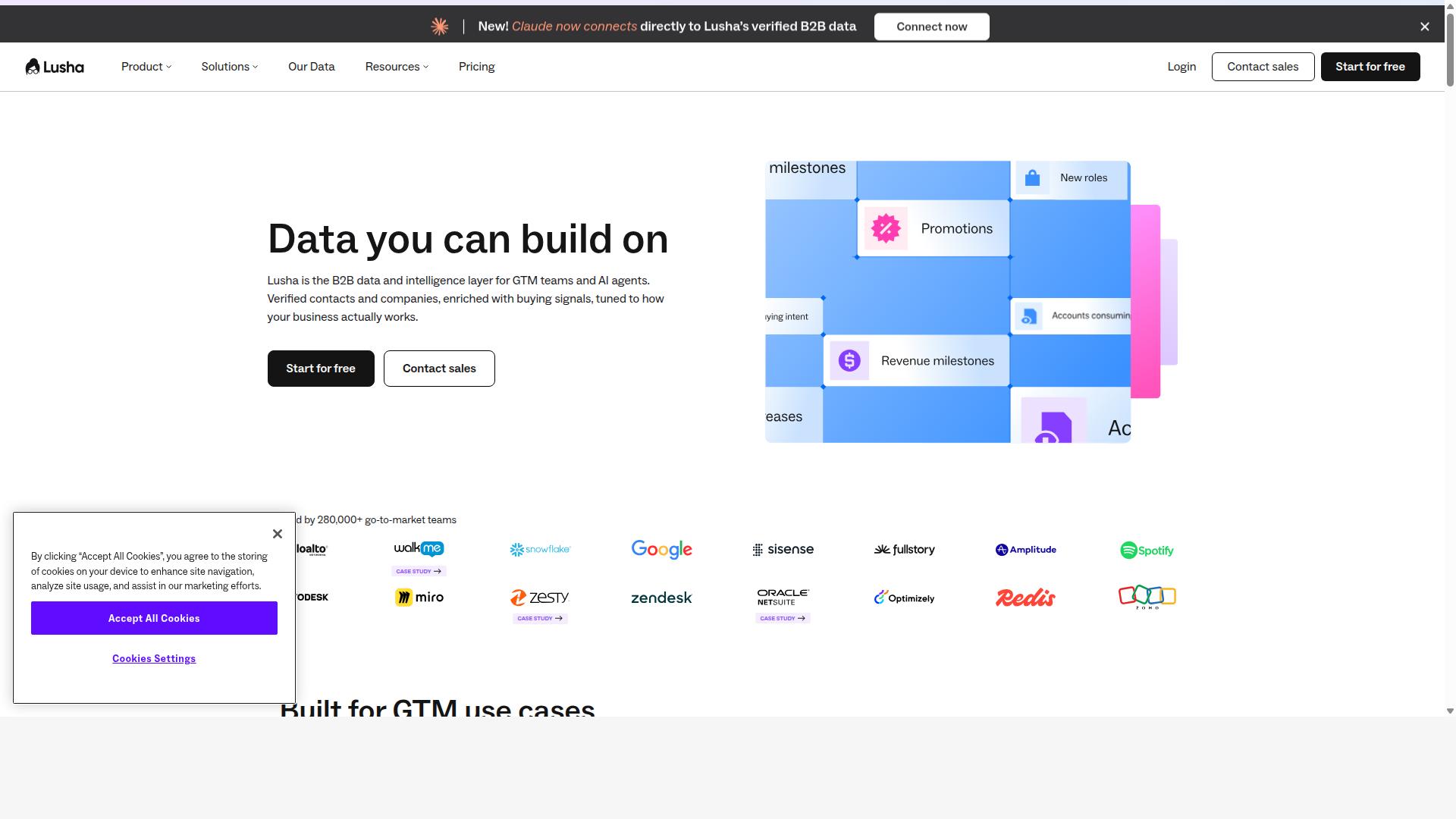
Lusha focuses on direct-dial phone numbers and email enrichment, offering tiered subscriptions that unlock higher volumes each month. The platform emphasizes verified B2B contact and company data that includes buying signals useful for go-to-market teams.
Users can work inside a Workspace for search and enrichment or rely on the Chrome extension when browsing LinkedIn or company sites. An API option also supports custom workflows and automation steps within existing sales stacks.
Monthly credit allowances appear on each plan. Users receive credits that reset on a recurring basis, so teams should track usage against their target contact volume before selecting a tier.
Lusha integrates with several popular CRMs, automation platforms, and AI assistants. These connections make it simple to move enriched records into Salesforce, HubSpot, Clay, or Zapier without manual exports.
General technographic enrichment is available alongside firmographics, yet accuracy can vary between regions and company sizes. Reviewers should compare accuracy metrics and international coverage for their specific use case before committing.
Compliance documentation covers GDPR, CCPA, ISO 31700, and SOC 2 Type II. These certifications signal that the dataset meets common privacy and security expectations for enterprise buyers.
Public case studies mention improved contact rates and prospecting outcomes. Teams planning to replace ZoomInfo should test sample lists to confirm fit with their own lead generation requirements.
4. Cognism
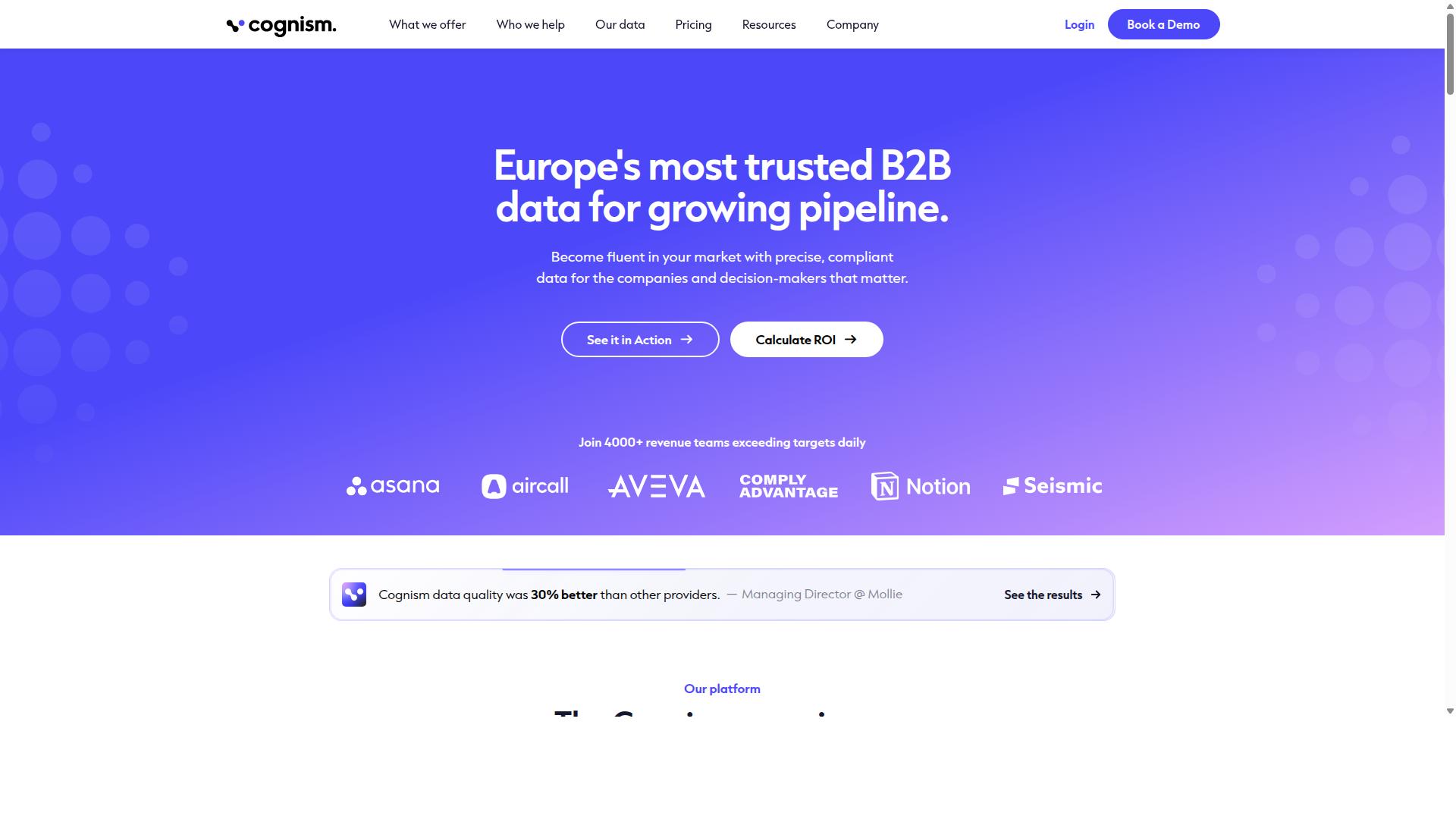
Cognism markets itself on GDPR-compliant European mobile data and a growing set of technographic attributes. The platform delivers phone-verified mobile numbers, intent signals, hiring alerts, and funding updates refreshed every thirty days.
Its sales intelligence features target revenue teams across enterprise, mid-market, and SMB companies with a focus on European markets. Real-time data delivery happens through API or batch exports that support CRM enrichment and prospecting workflows.
Privacy compliance stands out as a core element. The service meets GDPR, CCPA, ISO 27001, and SOC 2 Type II standards while applying DNC and TPS screening to every record.
Mobile coverage in the EMEA region receives special attention. Phone-verified mobile numbers help teams reach decision makers where landline data may fall short.
Subscription access follows a custom quote model. Potential users must contact the vendor directly to receive contract details and pricing tiers, which creates a less transparent buying experience compared to self-serve platforms.
5. Seamless AI
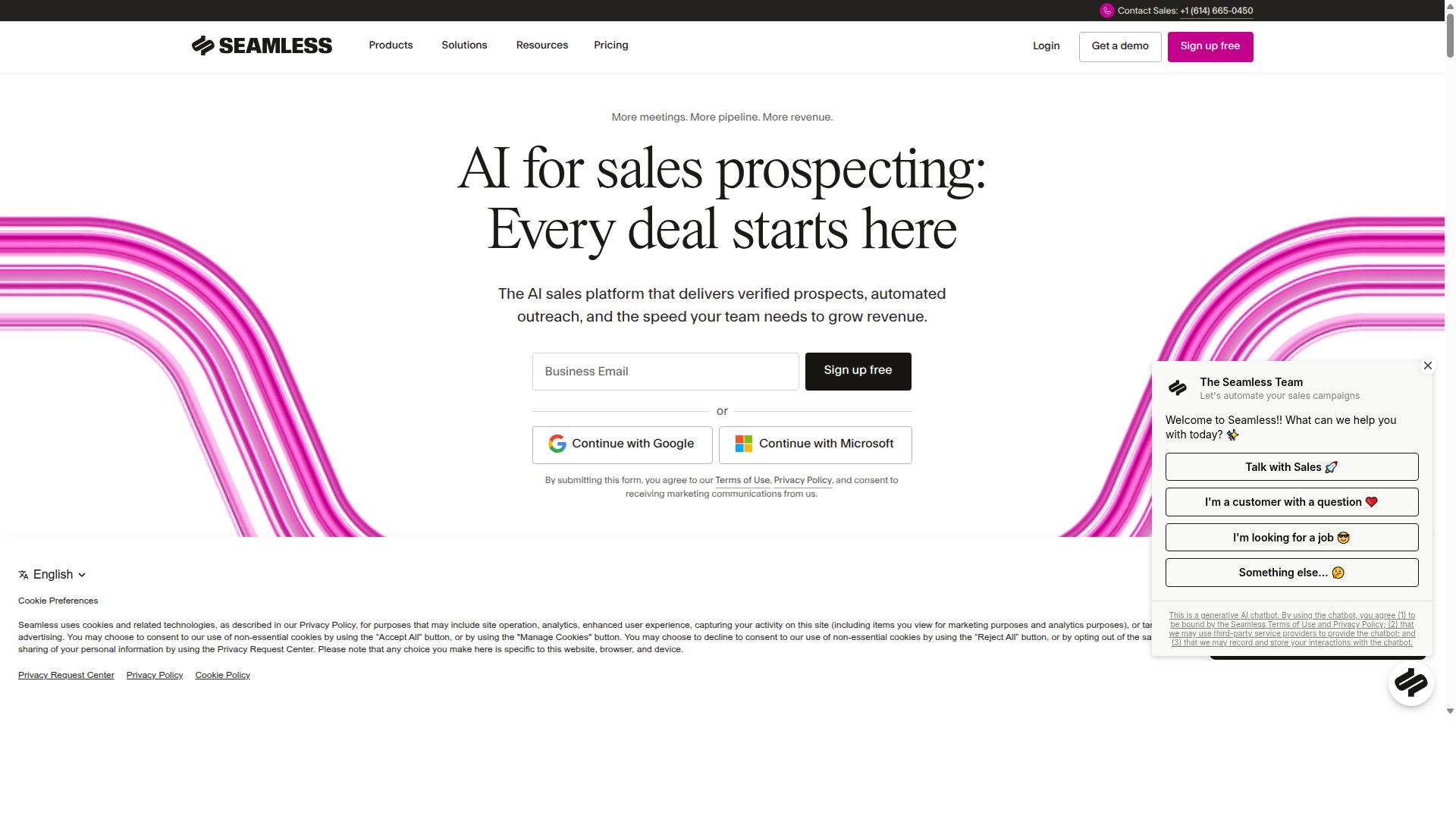
Seamless AI offers real-time search and bulk export of contacts but has drawn mixed feedback regarding bounce rates and data currency.
The platform focuses on real-time search capabilities that let users query prospects as needs arise. Users can pull large volumes of contact information through bulk export features designed for lead generation campaigns.
Subscription options include monthly tiers that scale based on usage volume. The service provides 100+ live data points per profile across a database that covers business emails and phone numbers. Integration options extend to thousands of third-party tools through API access and a Chrome extension.
Before committing to larger data purchases, experts recommend testing small exports to validate email accuracy and CRM compatibility. This approach helps teams confirm that the data format aligns with existing workflows and that bounce rates stay within acceptable ranges.
Users should also examine the 100 percent credit-back policy for invalid emails when evaluating overall value. The platform connects with common CRM systems, though the specific mapping requirements may vary depending on the destination tool.
6. UpLead
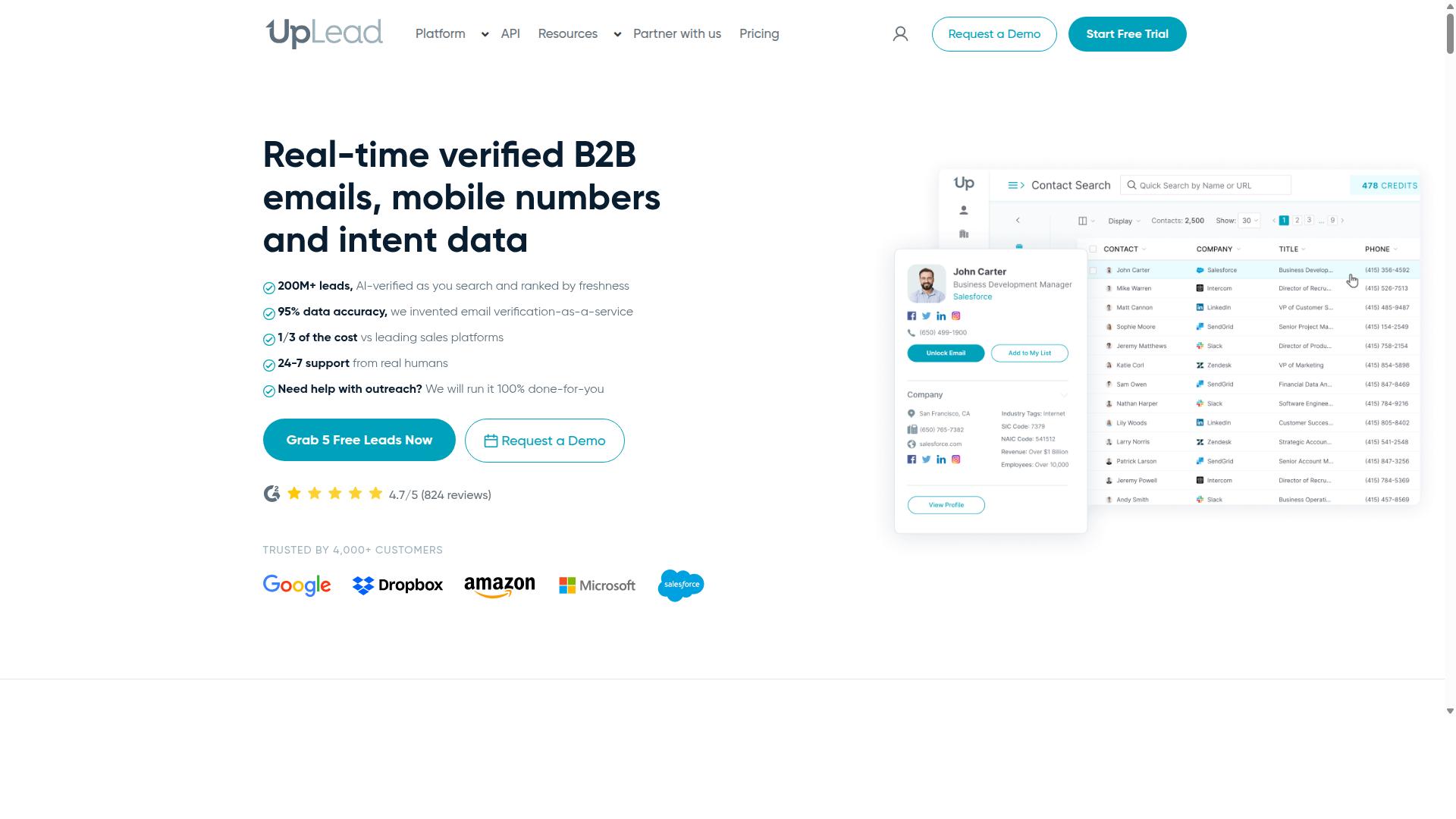
UpLead sells monthly plans that include a 95 % accuracy guarantee and simple technology-filter options.
The platform offers three pricing tiers. Essentials starts at $74 per month when billed annually and includes 170 credits. Professional and Enterprise plans scale up with higher credit allowances and team features.
Unused credits roll forward for one month. This policy helps teams avoid losing paid access during slower lead-generation periods.
The service claims coverage across 200 countries and 160 to 180 million verified contacts. Technographic attributes such as software usage and technology stack can be filtered before export.
Data accuracy is supported by real-time email verification on every download. Invalid contacts trigger a credit refund, reducing wasted spend.
Prospective buyers should download sample datasets first. Checking the completeness of technology-stack fields helps confirm fit before committing to larger credit packages.
7. Clearbit
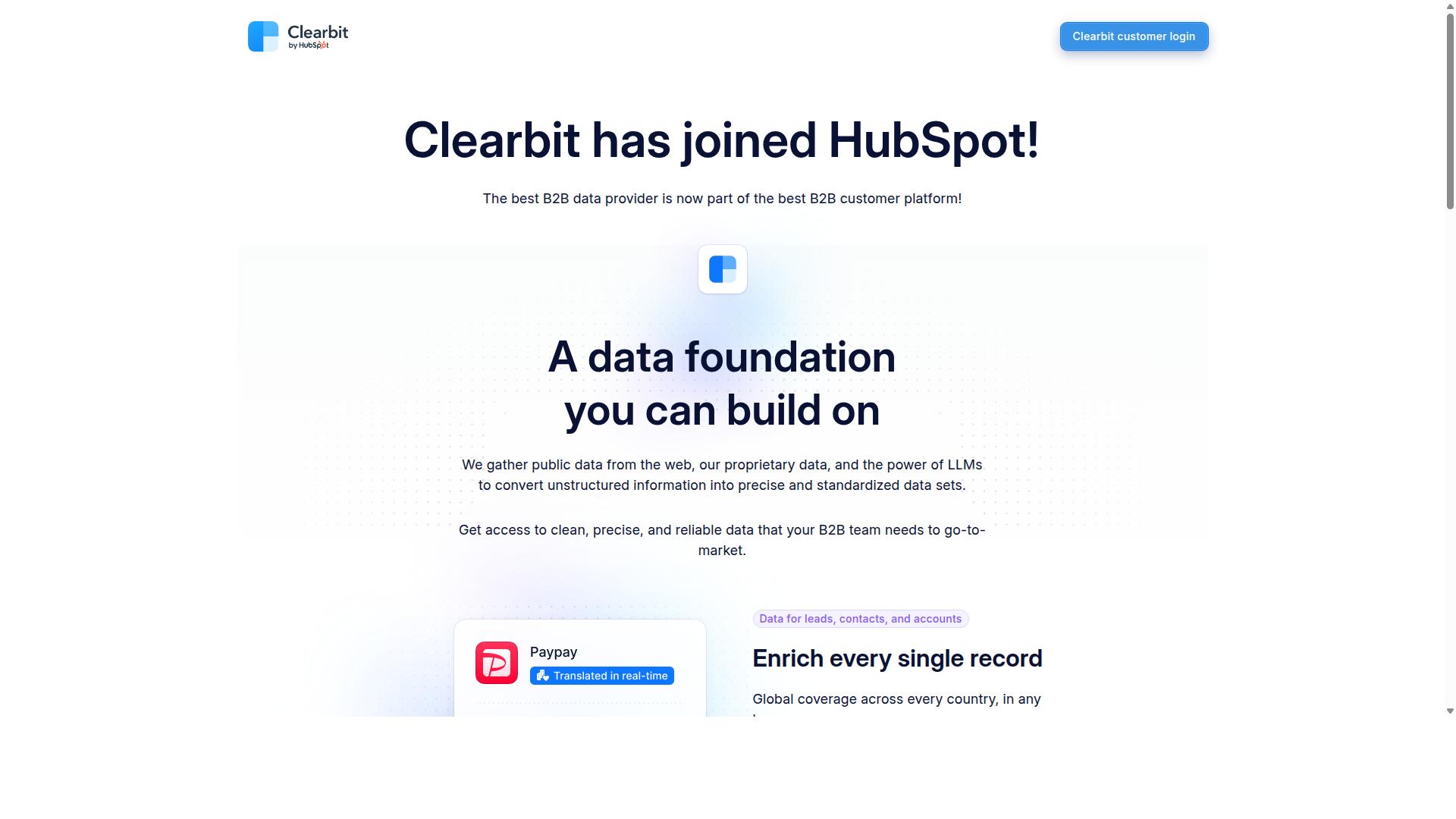
Clearbit concentrates on real-time firmographic and technographic enrichment via API rather than an end-user search interface. The platform targets developers who need to embed data directly into existing applications and workflows.
Developer tools form the core of this approach. Teams build custom enrichment processes without navigating through a traditional dashboard. This setup appeals to companies that already maintain their own data pipelines and prefer programmatic access over manual searches.
Pricing follows a usage-based model. Organizations pay according to the number of API calls rather than fixed subscription tiers. This structure works for variable data needs where monthly volumes may fluctuate significantly.
Integration examples include HubSpot CRM and marketing automation platforms. Clearbit enriches company and contact records with technology stack details and real-time signals. The service suits marketing and sales teams already operating within the HubSpot ecosystem.
High-volume API usage requires careful cost planning. Organizations should evaluate total cost of ownership by estimating monthly call volumes and testing actual enrichment rates before committing to large-scale implementation.
How to Choose the Right Option
Selecting a provider hinges on aligning technographic depth, compliance posture, and budget structure with the needs of your sales and marketing teams. B2B sales, marketing, recruiting and research teams require accurate technology stack data to power effective prospecting and lead generation campaigns.
Three evaluation steps help narrow the field. First, map required filters and accuracy thresholds directly to your ideal customer profile. Second, test integration effort with existing CRM and marketing automation systems. Third, model total spend under pay-as-you-go versus subscription models for your annual contact volume.
Bookyourdata serves businesses of all sizes including major enterprises such as IBM, Microsoft and Amazon. This broad customer base demonstrates reliable technographic data coverage across diverse industries and use cases.
Start by listing the technology vendors, software categories, and firmographics that define your target accounts. Compare each provider's coverage against these requirements before evaluating technical integration.
Next, examine API access and data export options for your current CRM environment. Bookyourdata supports 20,000+ paying customers who rely on consistent data delivery across multiple platforms and workflows.
Finally, calculate your expected contact volume and compare pricing structures. Pay-as-you-go models suit sporadic campaigns while subscriptions favor high-volume, recurring prospecting efforts.
Final Verdict
Bookyourdata stands out for teams that want verified technographic data without recurring fees or expiring credits. The platform offers a 97 percent accuracy guarantee with credit refund if the standard falls short. Real-time email verification at export reduces bounce rates before campaigns launch.
Pay-as-you-go pricing with credits that never expire contrasts sharply with subscription-heavy competitors. Users pay only for what they need and avoid monthly commitments that drain budgets during slower periods. This model suits both high-volume sales teams and occasional researchers who need flexibility.
Transparent per-contact pricing eliminates surprise invoices common in traditional sales intelligence platforms. The service also provides global reach with GDPR and CCPA compliance built in. Every record includes a public source link for verification.
Competitors often require annual contracts and bundle features that many teams never use. Bookyourdata focuses on the core needs of technographic data buyers through its best price guarantee. The approach delivers value for companies comparing ZoomInfo alternatives with different budget cycles.
Recommended Resources: